
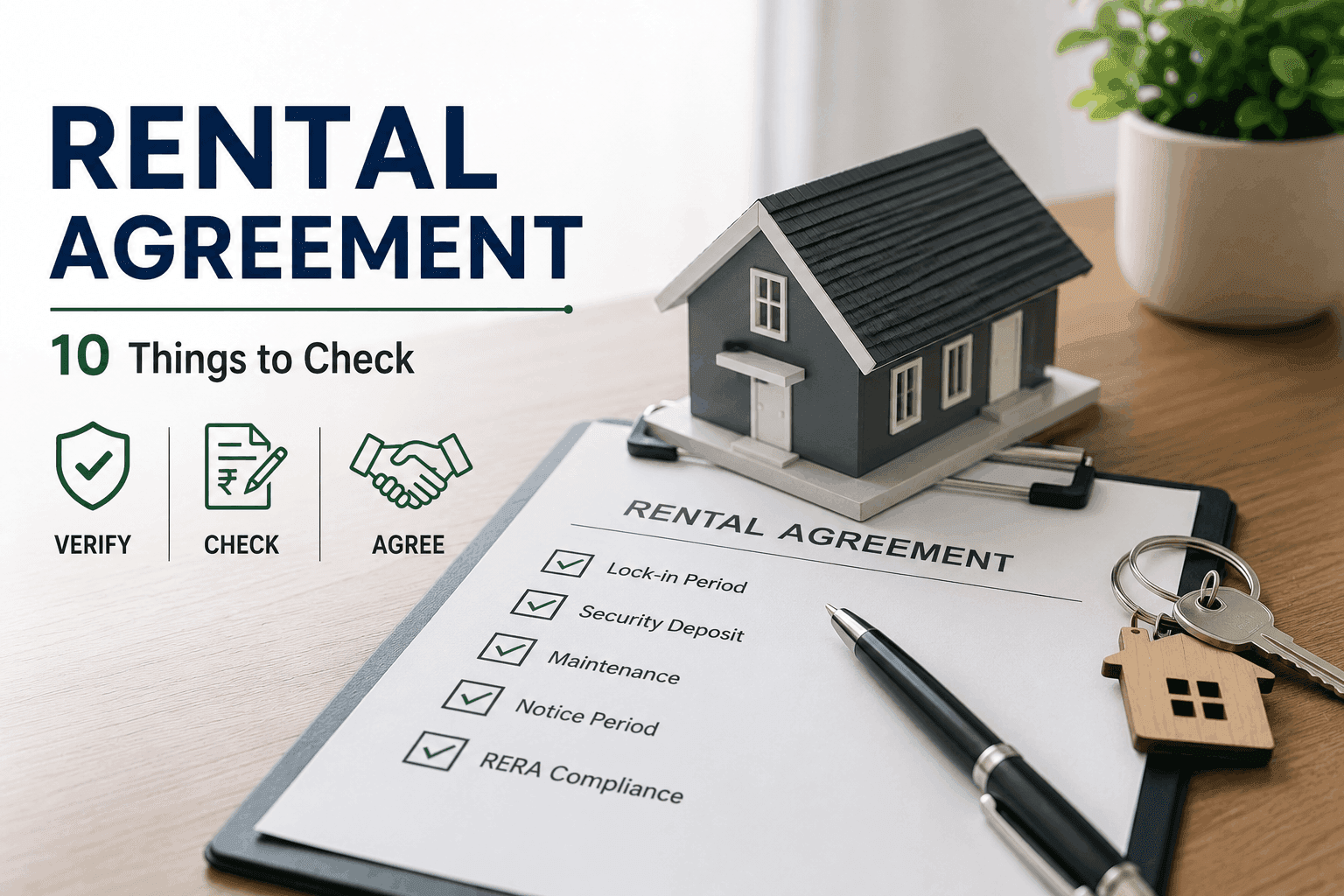
So, you have found the perfect flat in Ahmedabad's SG Highway or maybe a cozy apartment in Surat's Vesu. The rent is reasonable, the location is great, and you are ready to move in. But wait! Before you put pen to paper, there is one critical step that many tenants rush through: reviewing the rental agreement. I have seen too many people sign on the dotted line without a second thought, only to regret it later. Trust me, taking 20 minutes to verify these 10 Things to Check Before Signing a Rental Agreement in India can save you from months of stress and unexpected costs.
Why a Rental Agreement Matters More Than You Think
Here is the thing: a rental agreement is not just a formality. It is a legally binding document that governs your stay. In Gujarat, where the rental market is booming—from GIFT City in Gandhinagar to the posh societies of Vadodara's Alkapuri—disputes over deposits, maintenance, and notice periods are common. Many tenants assume the agreement is standard boilerplate. But in reality, every clause needs scrutiny.
What happens if your landlord demands an extra month's rent after a lock-in period? Or if they refuse to return your security deposit citing vague damage? That is precisely why you need to be armed with knowledge. Let me walk you through exactly what to look for.
1. Verify the Lock-In Period and Exit Clauses
This is probably the most overlooked clause. Most agreements in Gujarat—whether for a 2BHK in Bopal or a studio in Gota—include a lock-in period, typically 11 months. But here is the kicker: what if you need to move out early due to a job transfer or family emergency?
What to check:
- Is there a penalty for early exit? Usually, it is one month's rent or forfeiture of the security deposit.
- Can you sublet the flat? Many agreements explicitly ban subletting. In my experience, this is non-negotiable for most landlords in Ahmedabad.
- Look for a 'mutual termination' clause. This allows both parties to end the agreement with a written notice of 30-60 days.
Pro tip: If you are renting a flat near GIFT City for a short-term assignment, negotiate a shorter lock-in period. I personally recommend 3-6 months if possible.
2. Security Deposit: Amount, Refund Terms, and Deductions
Ah, the security deposit—the most common source of friction. In Gujarat, standard practice is 2-3 months' rent as deposit. But here is what many buyers overlook: the agreement must clearly state the conditions for deductions.
What to check:
- Is the deposit amount clearly mentioned? For example, a 2BHK in Satellite area (rent Rs 18,000/month) would have a deposit of Rs 36,000-54,000.
- Are there specific grounds for deductions? Normal wear and tear should not be deducted.
- What is the timeline for refund? Ideally, it should be within 30 days of vacating.
Real example: My friend Rakesh from Vadodara rented a flat in Akota. His agreement said 'damages to be assessed at landlord's discretion.' When he moved out, the landlord deducted Rs 25,000 for 'wall repainting'—which is normal wear. Rakesh had no legal recourse because the clause was vague. So, demand specificity!
3. Maintenance Charges and Utility Bills
Who pays for what? This is where confusion often arises. In many societies in Gujarat—like those in Shela or Prahlad Nagar—there are monthly maintenance charges that can range from Rs 1,500 to Rs 5,000 depending on amenities.
What to check:
- Is maintenance included in the rent or separate? If separate, what is the amount?
- Are utility bills (electricity, water, gas) payable by you or the landlord? In most cases, tenants pay usage charges.
- What about repairs? Minor repairs (under Rs 500) are usually tenant's responsibility; major ones (plumbing, electrical) are landlord's.
Actionable tip: Ask for the last 3 months' electricity bills to estimate your monthly cost. A flat in Chandkheda with an old AC can easily add Rs 2,000-3,000 to your monthly bills.
4. Notice Period and Renewal Terms
Here is a common scenario: your 11-month lease ends, and you want to stay. What happens? Many agreements automatically renew on a month-to-month basis. But some require a formal renewal with a fresh agreement and additional fees (stamp duty, registration).
What to check:
- What is the notice period for terminating the tenancy? Standard is 30 days for both parties.
- Does the agreement specify how renewal works? Is there a rent escalation clause? In Gujarat's hot markets like Surat's Vesu, landlords often demand 5-10% increase annually.
- Is the notice period the same for landlord and tenant? It should be reciprocal.
Wondering what happens if you give less notice? Usually, you lose your security deposit. So, plan ahead!
5. Inspection and Inventory of Furnishings
If you are renting a furnished flat in Piplod or a semi-furnished unit in Rajkot's Kalawad Road, you need a detailed inventory.
What to check:
- Does the agreement list all furniture, appliances, and fixtures with their condition?
- Are there photographs attached as evidence? This is gold for avoiding disputes.
- What is the process for reporting damages? Ideally, you should do a joint inspection within 7 days of moving in.
My personal recommendation: Take a video walkthrough on your phone and share it with the landlord via email. This creates a timestamped record.
6. Subletting and Guest Policy
Can your parents stay for a month? What about a friend visiting for a week? Some landlords in Gujarat are strict about guests.
What to check:
- Is subletting explicitly prohibited? Most agreements say 'no subletting without written consent.'
- Are there restrictions on guests staying more than 15 days? Some agreements require prior intimation.
- What about parking? Is there designated parking for visitors?
The truth is: If you plan to have guests frequently, clarify this upfront. A landlord in Naroda once charged my client extra for 'excessive visitors.' Not fun.
7. RERA Registration and Legal Compliance
Now, this is a crucial one for tenants in Gujarat. Under RERA, all rental agreements for properties registered with RERA must be registered. While RERA primarily covers sales, many rental agreements in societies like those in Gota or Vastral require the landlord to provide a RERA registration number if the property is under a builder's project.
What to check:
- Is the property registered with RERA? If yes, the agreement should reference the RERA number.
- Is the agreement stamped and registered as per Gujarat Stamp Act? For tenancies over 11 months, registration is mandatory.
- Does the agreement include the landlord's PAN and Aadhaar details? This is good practice.
Legal tip: If the landlord refuses to provide RERA details, be cautious. Unregistered properties can lead to disputes later.
8. Pet Policy and Noise Restrictions
Are you a pet parent? Or someone who works late and listens to music? Many societies in Ahmedabad's upscale areas like Satellite or Prahlad Nagar have strict rules.
What to check:
- Does the agreement mention pets? Some allow only cats or small dogs; others ban pets entirely.
- Are there quiet hours? Typically 10 PM to 7 AM.
- What about use of common areas like terrace or garden?
Quick tip: If you have a pet, get a 'pet addendum' signed. I have seen tenants forced to give up their Labrador because the agreement didn't explicitly allow it.
9. Dispute Resolution and Jurisdiction
What happens if you and your landlord disagree? The agreement should specify how disputes are resolved.
What to check:
- Is there an arbitration clause? This can save time and money compared to court.
- Which city's courts have jurisdiction? Ideally, it should be the city where the property is located (e.g., Ahmedabad Civil Court).
- Is there a penalty for late rent? Usually 2% per month, but confirm.
The reality is: Most disputes are settled through negotiation, but having a clear clause gives you leverage.
10. Read the Fine Print: Hidden Clauses
Finally, read every line. Yes, every single one. I cannot stress this enough. Some agreements contain hidden clauses that allow the landlord to increase rent arbitrarily or restrict your right to use the property.
What to check:
- Are there any blank spaces? Never sign an agreement with unfilled fields.
- Is there a 'force majeure' clause? This covers events like natural disasters.
- Does the agreement mention any additional charges like 'society maintenance' or 'parking fee'?
Personal anecdote: A client in Surat's Adajan area signed an agreement that had a clause saying 'landlord can enter the premises for inspection without notice.' That is a red flag! Demand that inspections be with 24-hour notice.
Key Takeaways: Your Rental Agreement Checklist
Here is a quick summary to take with you:
- Lock-in period: Negotiate if possible, especially for short-term assignments.
- Security deposit: Demand specific conditions for deductions and a 30-day refund timeline.
- Maintenance: Clarify what is included and what is extra.
- Notice period: Ensure it is reciprocal (30 days for both parties).
- Inventory: Take photos/videos of the flat before moving in.
- RERA compliance: Check if the property is registered.
- Pet policy: Get it in writing if you have pets.
- Dispute resolution: Prefer arbitration over court.
- Fine print: Never sign with blank spaces.
Conclusion: Don't Rush—Your Future Self Will Thank You
Signing a rental agreement in India, especially in Gujarat's dynamic real estate market, is not something to take lightly. Whether you are renting a 1BHK in Gandhinagar's Infocity or a 3BHK in Vadodara's Gotri, these 10 Things to Check Before Signing a Rental Agreement in India can make the difference between a smooth tenancy and a nightmare.
Take your time. Ask questions. And if something feels off, walk away. There are plenty of good properties out there. Remember, a well-drafted agreement protects both you and your landlord. So, go ahead, negotiate with confidence, and enjoy your new home!
Have questions about your specific rental situation? Drop a comment below or reach out. I am always happy to help readers navigate Gujarat's property market.