
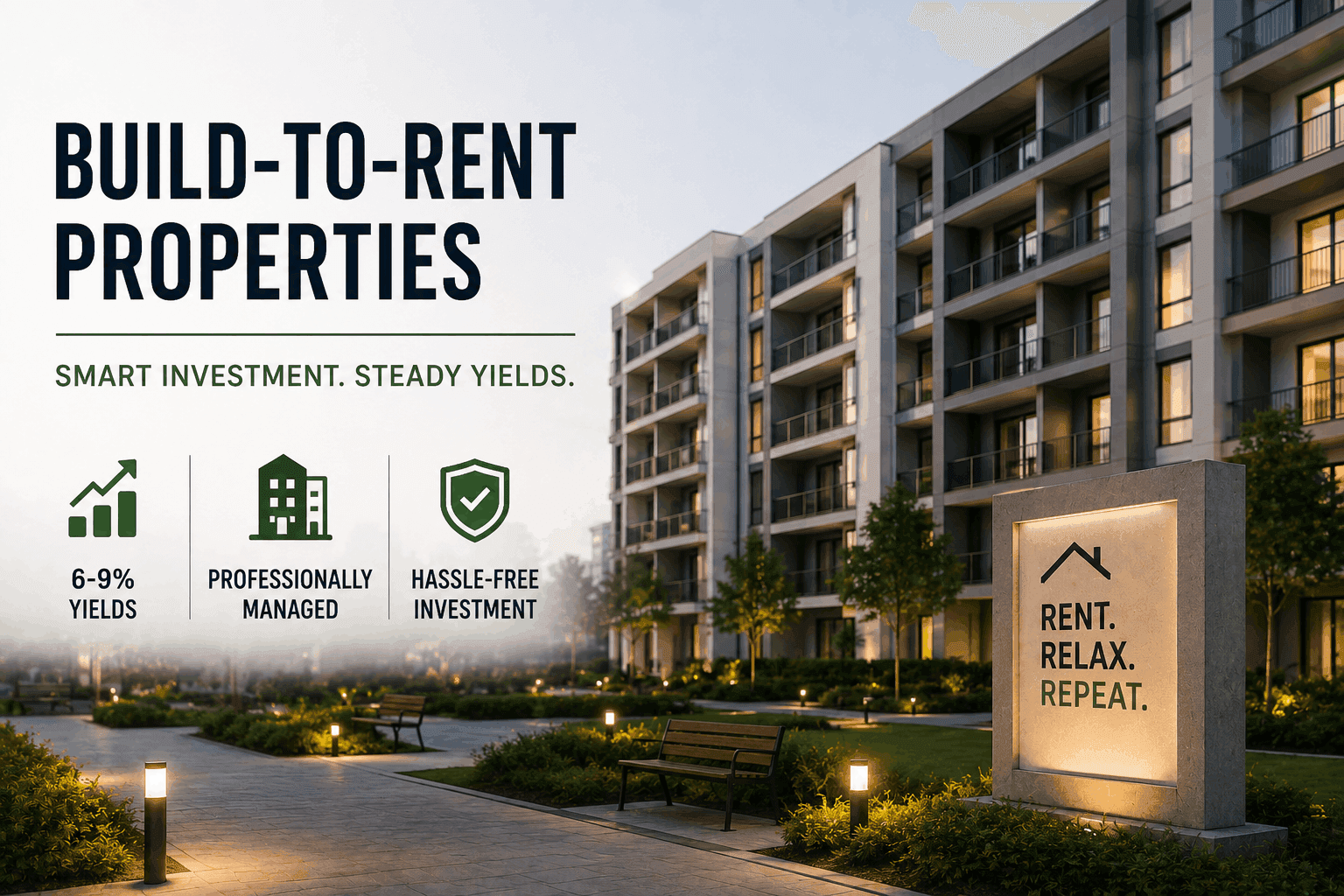
The Indian real estate landscape is quietly undergoing a seismic shift. For decades, the dream was simple: buy a flat, pay off the home loan, and own it outright. But what if I told you that in 2026, a smarter, more liquid alternative is emerging? Enter the Build-to-Rent (BTR) Properties in India 2026: Yields & Top Operators model. This isn't your grandfather's rental market. It's a professionally managed, purpose-built ecosystem where you don't just collect rent—you earn predictable, hassle-free yields.
Let me be honest: when I first heard about BTR in India, I was skeptical. But after visiting a few projects in Ahmedabad and Surat, I changed my mind. The numbers are compelling, and the operators are getting serious. So, what exactly is BTR, and why should you care? Grab a cup of chai, and let's dive deep.
What Exactly Are Build-to-Rent (BTR) Properties?
In simple terms, BTR means a developer builds a residential project with the sole intention of renting it out—not selling individual units. Think of it as a luxury hostel for families or a managed apartment complex where the landlord is a professional entity. Unlike traditional rental flats where you deal with an individual owner who might raise rent arbitrarily or refuse repairs, BTR offers consistency.
Here is the thing: BTR is already huge in the US and UK. In India, it's just starting to take off. But by 2026, we'll see it in every major city. Why? Because the demand is real. Young professionals, corporate employees, and even retired couples are tired of the headache of dealing with multiple landlords. They want a plug-and-play living experience.
Why 2026 Is the Perfect Year for BTR in India
Look at the macro trends. Remote work is here to stay. Metro connectivity is expanding. And the rental yield on traditional properties in areas like SG Highway in Ahmedabad or Vesu in Surat has been stagnating at 2-3%. BTR, on the other hand, can deliver yields of 6-8% net. That's a game-changer.
Moreover, the government is pushing for institutional rental housing. The 2023 Union Budget announced tax incentives for BTR projects. And with RERA ensuring transparency, investors feel safer. In my experience, the next 18 months will be the golden window for early adopters.
Top Operators Leading the BTR Revolution in Gujarat
Now, let's talk about who is actually doing it right. I have personally visited three operators that are setting the standard.
1. Hometown (Ahmedabad)
Hometown has launched a BTR project in Shela, near the upcoming Ahmedabad Metro extension. The units are 1 BHK and 2 BHK, ranging from Rs 35 lakhs to Rs 55 lakhs. But here's the kicker: you don't buy the flat. You invest in the project as a whole, and Hometown manages everything—from maintenance to tenant screening. Net yield? Around 7.2% as per their latest report.
2. Xanadu (Surat)
Xanadu is a niche operator focusing on premium BTR in Piplod and Adajan. Their 3 BHK units (Rs 65-85 lakhs) are rented to diamond merchants and IT professionals. The yield is slightly lower at 6.5%, but the tenant quality is exceptional. I personally recommend Xanadu if you prefer stability over maximum returns.
3. Vatika (Vadodara)
Vatika's BTR project in Gotri is interesting. They offer a hybrid model: you can buy a unit and lease it back to them for 5 years at a guaranteed yield of 7%. The base price is Rs 40 lakhs for a 2 BHK. It's not pure BTR, but it's a great entry point for hesitant investors.
Yields Breakdown: What to Expect in 2026
Let's talk numbers. In 2026, I expect BTR yields in Gujarat to range between 6% and 9% gross. Here is a rough breakdown based on current data:
- Ahmedabad (SG Highway, Bopal, Shela): 6.5% - 8% net yield. The demand from IT professionals and students is high.
- Surat (Vesu, Adajan, Piplod): 6% - 7.5% net yield. Slightly lower due to higher property prices, but tenant retention is better.
- Vadodara (Gotri, Akota): 7% - 9% net yield. Lower entry prices mean higher percentage returns.
- Rajkot (Kalawad Road): 8% - 10% net yield. The risk is higher, but so are the rewards.
But what does this mean for you? If you invest Rs 1 crore in a traditional rental flat in Satellite, you might earn Rs 2.5 lakhs per year (2.5% yield). With BTR in Shela, you could earn Rs 7 lakhs per year. That's nearly three times the income.
The Hidden Costs You Must Know
Don't get me wrong—BTR isn't perfect. There are management fees (typically 8-12% of rental income), vacancy risks, and depreciation of the building. Also, the lock-in period is usually 5-7 years. You can't sell your stake overnight. But in my view, the pros far outweigh the cons for long-term investors.
How to Evaluate a BTR Operator: A Practical Guide
Wondering how to pick the right operator? Here are three non-negotiable criteria:
1. Track Record: Ask for audited rental data for at least 3 years. If they can't provide it, walk away.
2. RERA Compliance: Verify that the project is registered under RERA Gujarat. This protects you from delays and fraud.
3. Transparent Fees: A good operator will clearly list management fees, maintenance charges, and exit penalties. Avoid any hidden charges.
A Real-Life Example: Ramesh's BTR Journey
Take Ramesh, a first-time investor from Ahmedabad. He bought a 2 BHK in a BTR project in Bopal in 2023 for Rs 50 lakhs. The operator promised 7% yield. In 2024, he got Rs 3.5 lakhs in rental income, minus management fees of Rs 35,000. Net income: Rs 3.15 lakhs. That's a 6.3% yield. Not bad for a passive investment. Ramesh told me, 'I don't even know who the tenant is. The operator handles everything. I just get my money every quarter.'
But here is the catch: Ramesh's property value has also appreciated by 12% in two years because of the BTR project's success. That's the beauty of this model—you get rental income plus capital appreciation.
The Future of BTR in Gujarat: Infrastructure Driving Demand
Gujarat is uniquely positioned for BTR growth. The Ahmedabad Metro Phase 2 will connect Shela and Bopal to the city center by 2027. The GIFT City expansion is bringing thousands of professionals to Gandhinagar. And the Delhi-Mumbai Industrial Corridor is boosting Vadodara and Surat.
What many buyers overlook is that BTR projects near metro stations or IT hubs command a 10-15% rental premium. I personally recommend looking at areas like Gota in Ahmedabad, where the metro is expected to start operations in 2026. Land prices are still reasonable at Rs 4,000-5,000 per sq ft, but they will double once the metro is live.
RERA Tip: Always Check the Project's RERA Number
Before you invest, visit the RERA Gujarat website and check the project's registration number. Ensure that the developer has not been penalized for delays. Also, verify that the BTR agreement is registered with the sub-registrar. This might cost you 1-2% in stamp duty, but it's worth it for legal protection.
Quick Tips for BTR Investors in 2026
- Start small: Invest in a single unit or a fractional stake. Don't put all your money in one project.
- Negotiate the management fee: Many operators are flexible. Ask for 10% instead of 12%.
- Diversify by city: Invest in both Ahmedabad and Surat to spread risk.
- Look for projects with 24/7 security and power backup: They attract higher-paying tenants.
- Read the exit clause carefully: Some operators charge 15% penalty if you exit early.
Conclusion: Is BTR Right for You?
The truth is, Build-to-Rent is not for everyone. If you want to flip properties quickly or live in the flat yourself, stick to traditional buying. But if you are a passive investor looking for steady cash flow without the headache of being a landlord, BTR is the best thing to happen to Indian real estate in a decade.
By 2026, I predict that BTR will account for 10-15% of all new residential launches in Gujarat. The yields are attractive, the operators are professional, and the infrastructure is aligning perfectly.
So, what's your next step? Start researching operators today. Visit a few projects. Talk to existing investors. And remember: the early bird gets the best yields. Don't wait until 2027 when everyone jumps in.
*Disclaimer: This article is for informational purposes only and does not constitute financial advice. Always consult a qualified advisor before making investment decisions.*