
Understanding Ahmedabad's Flood-Prone Areas: A Must-Read for Homebuyers
Ahmedabad is a city of contrasts. On one hand, you have gleaming high-rises on SG Highway and the planned infrastructure of GIFT City. On the other, every monsoon, certain neighborhoods turn into mini-lakes. I have been covering Gujarat real estate for over 15 years, and let me tell you—flooding is one of the most underestimated risks for property buyers here.
Flooding Zones in Ahmedabad: Maps, Risks, and Insurance Premium Impact is not just a topic for insurance agents. It is a critical factor that can affect your property's value, your peace of mind, and your wallet. Whether you are looking at a Rs 45 lakh flat in Vastral or a Rs 1.2 crore villa in Shela, understanding flood risks is non-negotiable.
But what does this mean for you? Let me break it down.
The Reality of Ahmedabad's Flood Zones
Ahmedabad's topography is largely flat, with the Sabarmati River cutting through the city. Historically, areas close to the river—like parts of Shahpur, Kalupur, and Raipur—have faced severe flooding during heavy rains. However, in recent years, urbanization has worsened the situation. Encroachments on natural water channels, poor drainage, and haphazard construction have created new flood-prone pockets.
The Official Flood Zone Maps
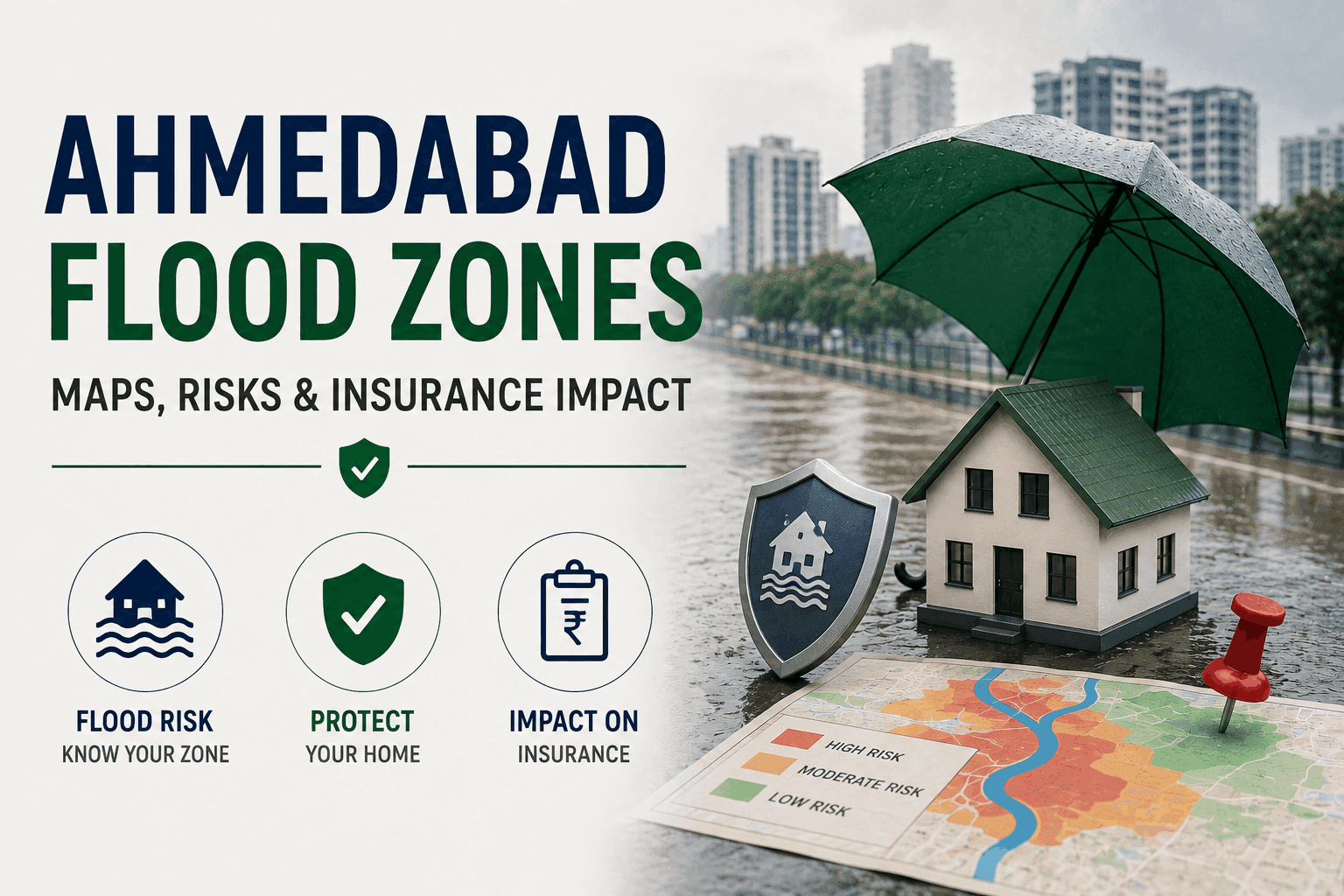
The Ahmedabad Municipal Corporation (AMC) and the Gujarat State Disaster Management Authority (GSDMA) have published flood hazard maps. These maps categorize areas into three zones:
- High-Risk Zones: Low-lying areas near the Sabarmati, including parts of Shahibaug, Dariyapur, and Jamalpur. Also, areas with poor drainage like certain pockets of Naroda and Vatva.
- Moderate-Risk Zones: Suburbs like Bopal, Ghuma, and parts of Shela where rapid construction has blocked natural water flow.
- Low-Risk Zones: Higher-elevation areas like Satellite, Prahlad Nagar, and parts of SG Highway.
Here is the thing: these maps are not static. Every monsoon, new areas get added to the list. For instance, in 2021, some parts of Gota and Chandkheda—previously considered safe—experienced waterlogging for over 48 hours.
How Flooding Impacts Property Prices
Let me give you a real example. Last year, a client of mine—let us call him Ramesh—was thrilled to buy a 2BHK flat in a new project near Naroda. The price was Rs 35 lakhs, almost 20% cheaper than similar flats in nearby areas. He thought he had found a steal. But then came July. The society's ground floor was flooded knee-deep. The builder had not disclosed the flooding history. Ramesh is now stuck with a property he cannot sell without taking a huge loss.
The truth is, properties in flood-prone zones lose value quickly. In my experience, prices in high-risk areas can drop by 15-25% compared to similar properties in safe zones. Moreover, re-sale becomes a nightmare. Buyers are now smart—they check flood records before even visiting a property.
Specific Localities at Risk
Based on my analysis and AMC data, here are the areas you should be cautious about:
- Vastral and Vatva: These eastern suburbs face chronic waterlogging due to poor drainage and proximity to the Sabarmati's overflow channels. A 1BHK here may cost Rs 25-30 lakhs, but you will pay for repairs every monsoon.
- Bopal and Ghuma: Surprising? Yes. These western areas were once safe, but rapid construction has blocked natural drainage. Many villa projects on Ghuma Road saw water entering ground floors in 2023.
- Gota and Chandkheda: With the new metro line, prices have risen, but flooding issues persist in low-lying pockets. A 2BHK here might be Rs 50-55 lakhs, but check the specific plot elevation.
The Insurance Angle: Premium Impact
Now, let us talk about something most buyers ignore—home insurance. If you are taking a home loan, banks usually require insurance. But here is the catch: if your property is in a flood-prone zone, your premium can be 30-50% higher than standard rates.
Why Insurance Companies Care About Flood Zones
Insurance companies use flood zone maps to assess risk. For high-risk zones, they either charge a higher premium or exclude flood damage from standard policies. You might need a separate flood insurance rider, which adds Rs 5,000-15,000 per year to your cost.
What many buyers overlook is that even if you are in a moderate-risk zone, your premium can increase if your building has a history of waterlogging. I personally recommend checking with at least three insurers before finalizing a policy. Ask them specifically: "Does this policy cover flood damage?"
Practical Tip: How to Reduce Insurance Costs
- Choose a property on the first floor or above—ground floor flats in flood-prone areas attract the highest premiums.
- Install flood prevention measures like sandbags, sump pumps, or raised electrical outlets. Some insurers offer discounts for these.
- Check if your society has a flood management plan. Societies with good drainage and flood barriers get better rates.
RERA and Legal Considerations
Under RERA Gujarat, builders are required to disclose all material facts, including flood risks. However, many do not. In fact, a 2023 study by a local consumer group found that only 30% of projects in flood-prone areas had proper disclosure.
Here is what you can do: Before booking any property, ask the builder for a flood risk assessment report. Also, check the AMC's flood zone maps online. If the builder hides information, you can file a complaint with RERA Gujarat. I have seen cases where buyers got their money back after proving non-disclosure.
Key Takeaways for Homebuyers
- Always check flood zone maps before shortlisting a property. Do not rely on the builder's word.
- Visit the area during monsoon—even if it is inconvenient. Walk around the society and nearby roads.
- Factor in insurance costs when calculating your budget. A cheap flat might end up costing you more in premiums.
- Consider elevation: Properties on higher ground or on upper floors are safer.
- Ask about society drainage: Societies with good maintenance and drainage systems are worth the extra cost.
Final Thoughts: Is It Worth the Risk?
Look, I am not saying you should avoid all flood-prone areas. Some of these localities—like Bopal or Gota—have excellent connectivity and amenities. But you must go in with open eyes.
My personal recommendation? If you are on a tight budget and looking at a property in a high-risk zone, negotiate hard. You can often get a 10-15% discount because of the flood risk. Just ensure you have a solid insurance plan and a contingency fund for repairs.
Wondering where to invest safely? Stick to Satellite, Prahlad Nagar, parts of SG Highway, and the newer developments in Gandhinagar's GIFT City area. These have better drainage and higher elevation.
Your move: Next time you visit a property, ask these three questions: 1) Is this area on the AMC flood map? 2) Has the society faced waterlogging in the last 5 years? 3) What is the elevation of this plot compared to the main road? Trust me, these questions can save you from a world of trouble.
Ahmedabad is a wonderful city to live in—just make sure your dream home does not turn into a swimming pool every monsoon.