Are you eyeing land in Gujarat's booming real estate market? Wondering whether to buy agricultural green-zone land or residential yellow-zone plots? The choice between Green-Zone vs Yellow-Zone Land: Conversion Rules & Investment Risk can make or break your investment. Let me be straight with you—this isn't just about soil color. It is about legal headaches, conversion costs, and long-term returns.
In my 15 years covering Gujarat property, I have seen buyers lose crores because they skipped this step. Take Ramesh from Ahmedabad. He bought a 2,000 sq yard plot in Shela, thinking it was prime residential land. Turns out, it was green-zone agricultural land. He spent two years and Rs 12 lakhs fighting conversion. Not fun.
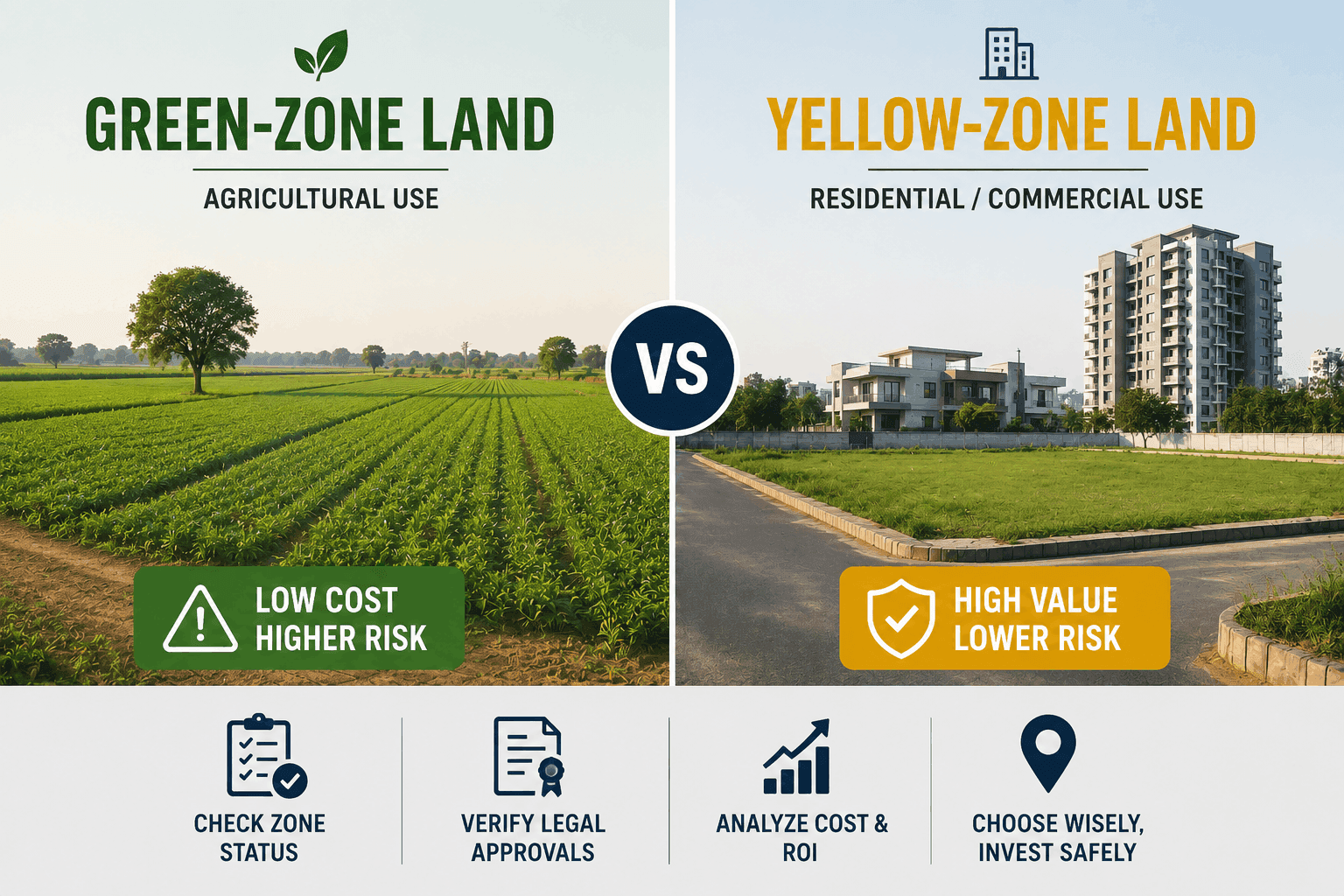
Here is the thing: Gujarat's Town Planning (TP) schemes classify land into zones. Green zone is for agriculture and open spaces. Yellow zone is for residential and commercial development. The rules differ, and so do the risks. Let me break it down for you.
What Is Green-Zone Land? Understanding the Basics
Green-zone land, as per Gujarat's TP schemes, is earmarked for agricultural use, gardens, parks, and green belts. You cannot build a residential flat or commercial complex here without conversion. Sounds simple, right? But here is where it gets tricky.
In areas like Shela, Bopal, and Gota in Ahmedabad, large tracts are still green zone. Developers buy it cheap—Rs 800-1,200 per sq yard—but the conversion cost can be Rs 200-400 per sq yard. That adds up. For a 5,000 sq yard plot, you are looking at Rs 10-20 lakhs just for permission.
Moreover, green-zone land has a 10-year waiting period for conversion under the Gujarat Land Revenue Code. Yes, you read that right. Ten years. Unless you are a farmer or the land falls in a special development zone. So if you are an investor hoping to flip it quickly, think again.
Key Features of Green-Zone Land
- Usage: Agriculture, horticulture, or open spaces only
- FAR: Zero for non-agricultural use without conversion
- Price: Low—typically Rs 500-1,500 per sq yard in outskirts
- Risk: High—conversion can be denied or delayed
What Is Yellow-Zone Land? The Residential Sweet Spot
Yellow-zone land is the gold standard for residential and commercial development. In Gujarat's TP schemes, this zone allows construction of flats, bungalows, and shops. No conversion needed. Just get your building plan approval from the local authority.
In prime locations like Satellite, SG Highway, and Prahlad Nagar in Ahmedabad, yellow-zone land prices range from Rs 5,000 to Rs 15,000 per sq yard. For a 3,000 sq yard plot, you are paying Rs 1.5-4.5 crores. But here is the good news: you can start construction immediately.
Wondering why yellow zone is so expensive? Simple. It has clear title, no conversion hassles, and higher FSI (Floor Space Index). For example, in Surat's Vesu area, yellow-zone plots command Rs 8,000-12,000 per sq yard because developers know they can build 4-5 storey buildings.
Key Features of Yellow-Zone Land
- Usage: Residential, commercial, mixed-use
- FAR: 1.2 to 2.0 depending on road width
- Price: High—Rs 3,000-15,000 per sq yard in developed areas
- Risk: Low—no conversion needed, clear title
Green-Zone vs Yellow-Zone Land: Conversion Rules That Matter
Now let us dive into the nitty-gritty. The conversion rules are where most investors trip. Here is what you need to know.
The Conversion Process for Green-Zone Land
To convert green-zone to yellow-zone (residential), you need approval from the Gujarat Revenue Department and the Town Planning Department. The process takes 6-12 months if everything goes smoothly. But what many buyers overlook is the NOC from the Agriculture Department.
Here is a practical tip: Check if the land falls under the 'Land Ceiling Act' or is designated as 'Prime Agricultural Land'. In Gandhinagar's Infocity area, some green-zone plots cannot be converted at all because they are part of the green belt. Talk to a local RERA-registered lawyer before signing anything.
Costs Involved in Conversion
- Conversion fee: Rs 200-500 per sq yard (varies by district)
- Premium charges: Up to 50% of land value for TP scheme reservations
- Legal fees: Rs 50,000-2 lakhs for documentation
- Time cost: 1-3 years of waiting
In my experience, many buyers assume conversion is automatic. It is not. The government can deny conversion if the land is reserved for public amenities. I have seen cases in Vadodara's Akota area where buyers lost their deposit because conversion was rejected.
Investment Risks: Green Zone vs Yellow Zone
Let me be blunt. Investing in green-zone land is like playing poker with the government. You might win big, but you could also lose everything. Here is the risk comparison.
Green-Zone Land Risks
1. Conversion Denial: The government can reject your application without reason
2. Time Uncertainty: You might wait 5-10 years for approval
3. Title Issues: Agricultural land often has family disputes or succession issues
4. Liquidity: Hard to sell without conversion—buyers are rare
5. Price Volatility: If conversion fails, land value drops 50-70%
Yellow-Zone Land Risks
1. High Entry Cost: You need Rs 2-5 crores for a decent plot in good areas
2. Market Fluctuations: Prices can dip 10-15% in economic downturns
3. Builder Delays: If buying from a developer, check RERA registration
4. Infrastructure Risk: If road widening happens, your plot might get reduced
That said, yellow-zone land is far safer for most investors. You can get a home loan, build immediately, and sell easily. In Rajkot's Kalawad Road area, yellow-zone plots have appreciated 12-15% annually over the last 5 years.
Where Should You Invest? My Personal Recommendations
Look, I am not a financial advisor, but here is what I tell my clients. If you have deep pockets and patience, green-zone land in emerging corridors can give you 3-4x returns in 10 years. For example, land near the proposed Ahmedabad Metro Phase 2 in Bopal is still green zone. If conversion happens, you could make a killing.
But for most buyers, yellow-zone land is the smarter bet. You get immediate possession, clear titles, and easy financing. In Surat's Piplod area, a 2,500 sq yard yellow-zone plot cost Rs 2.5 crores in 2020. Today, it is worth Rs 4 crores. That is 60% in 4 years. Not bad, right?
Here is a quick tip: Always check the TP scheme map of the area. You can get it from the Ahmedabad Urban Development Authority (AUDA) or Surat Municipal Corporation (SMC) website. Look for the 'Land Use' classification. If it says 'Green Zone', ask the seller for the conversion approval letter.
Legal Tips and RERA Insights
Under RERA Gujarat, if you buy a plot from a developer, they must disclose the land zone in the agreement. If they hide that it is green-zone land, you can file a complaint with RERA. I have seen cases where buyers got full refunds with interest because developers misrepresented the land.
Also, remember Section 24(b) of the Income Tax Act. If you take a home loan for a yellow-zone residential plot, you can claim interest deduction up to Rs 2 lakhs per year. For green-zone land, no such benefit unless you build a house.
Key Takeaways: Quick Tips for Buyers
- Always verify land zone: Check the TP scheme map or get a 7/12 extract from the village office
- Green-zone conversion is risky: Budget for 2-3 years of waiting and Rs 10-20 lakhs extra costs
- Yellow-zone is safer: Higher upfront cost but lower legal risk
- Check RERA registration: For developer projects, ensure RERA number is valid
- Hire a local lawyer: Do not rely on the seller's claims—get independent legal advice
- Consider location: Green-zone land near metro or highway has better conversion chances
Conclusion: Your Next Steps
So, what is the verdict? If you are a first-time buyer or need a home within 2-3 years, go for yellow-zone land. It is worth paying Rs 2-3 crores for peace of mind. If you are a seasoned investor with a 10-year horizon, green-zone land in high-growth corridors like Shela, Gota, or Gandhinagar's GIFT City can be a goldmine.
But here is my final advice: Do not rush. Spend Rs 50,000 on a legal due diligence. It will save you crores later. And always remember, in Gujarat real estate, the land zone is everything. Ignore it at your own risk.
Ready to find your perfect plot? Start by checking the TP scheme map of your target area. If you need help, drop a comment below. I reply to every query personally.