
Introduction
You have found your dream flat in Ahmedabad's SG Highway or perhaps a villa in Surat's Vesu. The deal is done, the loan is sanctioned, and possession is around the corner. But wait – have you thought about the Gujarat Society Conveyance Deed process? Most buyers focus on their sale deed and home loan, completely overlooking this critical legal step. In fact, I have seen countless families in Vadodara and Rajkot face delays and disputes simply because they forgot a few key papers. Here is the thing: without a proper conveyance deed, your society does not legally own the land it stands on. And that can be a nightmare when you try to sell your flat later. Let me walk you through the documents you absolutely cannot afford to miss.
Understanding the Conveyance Deed in Gujarat
A conveyance deed is the legal document that transfers ownership of land from the builder to the society or cooperative housing society. It is the final step in ensuring your society has clear title to the property. The Gujarat Society Conveyance Deed process involves multiple parties: the developer, the society, and the sub-registrar. But here is what many buyers overlook: it is not just about the builder handing over papers. You need specific documents from your side too.
Why Is This Process So Important?
Think about it. Without a conveyance deed, your society is essentially a tenant on the land. The builder retains ownership. This can lead to issues when you want to sell your flat, take a loan, or even when the society wants to redevelop. I have personally seen cases in Bopal and Gota where societies struggled for years because the builder never executed the conveyance deed. The Gujarat Real Estate Regulatory Authority (RERA) has made this mandatory, but compliance is still patchy.
Documents Most Buyers Forget in the Conveyance Deed Process
Here is where most buyers slip up. They assume the builder will handle everything. But the law requires the society to apply for the conveyance deed. And for that, you need to submit certain documents. Let me list the ones that are most commonly forgotten.
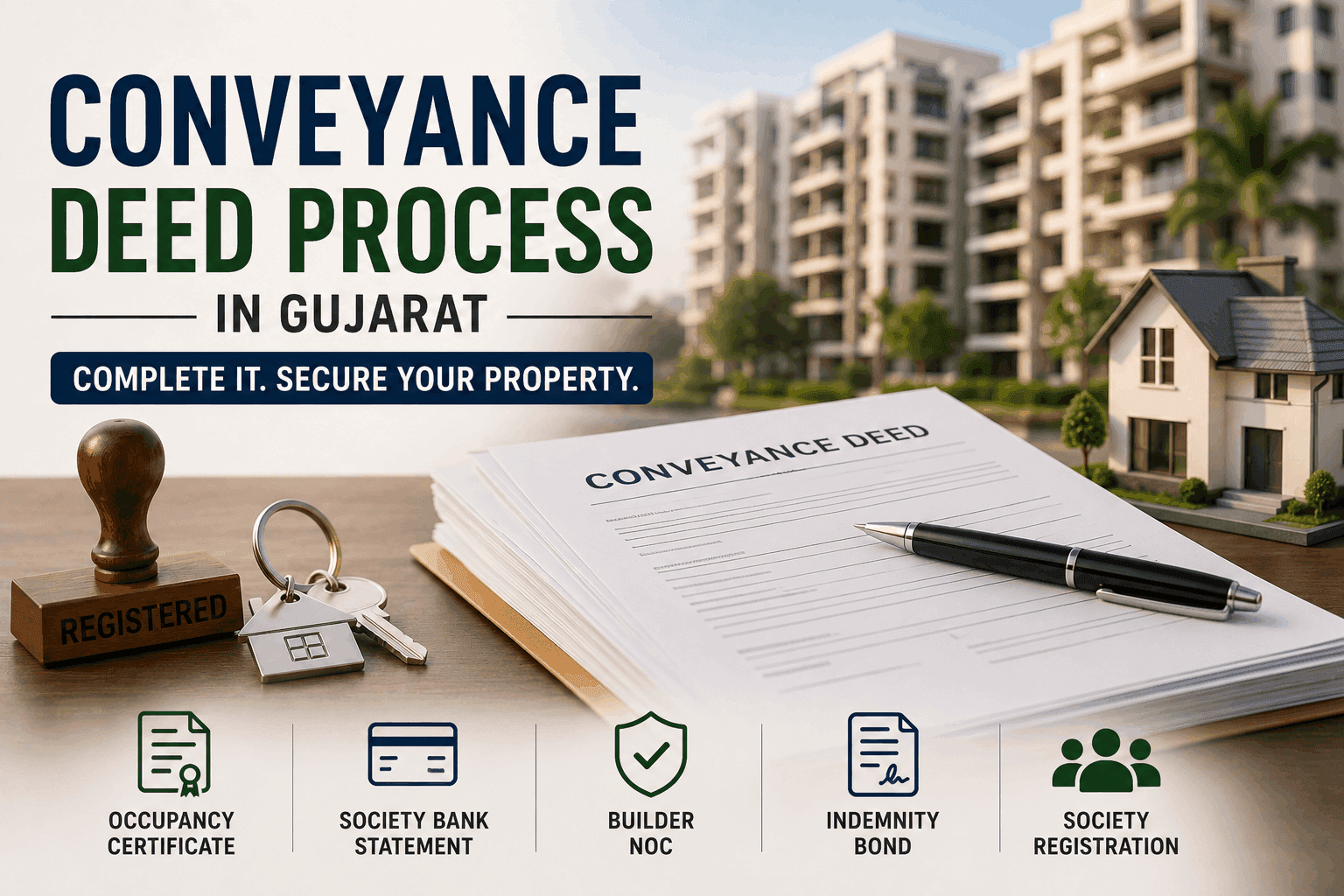
1. The Occupancy Certificate (OC) and Completion Certificate (CC)
Surprisingly, many buyers forget that the OC and CC are not just for possession. They are essential for the conveyance deed. Without these, the sub-registrar will not register the deed. In Ahmedabad's Satellite area, I have seen buyers wait months because the builder had not obtained the final OC. Always check that your builder has the OC and CC before you even think about the conveyance deed.
2. The Society's Bank Account Statement
This is a weird one, but it is mandatory. The sub-registrar requires a copy of the society's bank account statement showing that the society has paid the stamp duty and registration fees. Many societies forget to open a separate account for this. In Surat's Adajan area, one society had to redo their entire application because they used a personal account.
3. The No Objection Certificate (NOC) from the Builder
You would think this is obvious, but I have seen cases where builders refuse to issue an NOC because of pending dues. The NOC confirms that the builder has no objection to the society getting the conveyance deed. Get this in writing before you proceed. In Gandhinagar's GIFT City area, a builder held up the process for six months because of a dispute over maintenance charges.
4. The Indemnity Bond for Lost Documents
This is a major one. If any original document is lost – say, the original sale deed or the building plan approval – you need an indemnity bond. Most buyers do not even think about this until the sub-registrar asks for it. I recommend making multiple certified copies of all documents from the beginning. In Rajkot's Kalawad Road, a buyer had to pay a hefty penalty because the original plot map was missing.
5. The Society's Registration Certificate
Your society must be registered under the Gujarat Cooperative Societies Act. Many buyers assume this is done by the builder, but it is your responsibility. Without a valid registration certificate, the sub-registrar will not entertain your application. In Vadodara's Alkapuri area, a society had to re-register because the original certificate had expired.
Step-by-Step Guide to the Gujarat Society Conveyance Deed Process
Now that you know the documents, let me walk you through the actual process. It is not as complicated as it sounds, but it requires patience.
Step 1: Collect All Required Documents
Start by gathering the following:
- Sale deed of the land
- Building plan approval
- Occupancy Certificate
- Completion Certificate
- Society registration certificate
- NOC from the builder
- Bank account statement of the society
- Indemnity bond (if any document is missing)
- List of all members and their flat details
Step 2: Appoint a Conveyance Deed Advocate
Do not try to do this yourself. Hire a local advocate who specializes in Gujarat property law. They will draft the deed and ensure all documents are in order. In Ahmedabad, I recommend advocates near the Civil Court complex. They know the sub-registrar's requirements inside out.
Step 3: Submit the Application to the Sub-Registrar
Take all documents to the sub-registrar office in your area. For example, if your society is in Bopal, you go to the Ahmedabad Rural sub-registrar. Pay the stamp duty (usually 5-6% of the land value) and registration fees. The sub-registrar will verify the documents and issue a receipt.
Step 4: Wait for the Deed to Be Registered
This can take 30 to 90 days. The sub-registrar will issue a notice to the builder and the society. If there are no objections, the deed is registered. You will receive a certified copy. Keep this safe – it is as important as your sale deed.
Step 5: Update the Land Records
Finally, you need to update the land records with the revenue department. This ensures that the society's name appears in the property card. In Gujarat, this is done at the Talati office. Many buyers skip this step, but it is crucial for future transactions.
A Real-Life Example: The Shela Society Saga
Let me tell you about a society in Shela, Ahmedabad. A group of 50 families bought flats in a project near the SP Ring Road. The builder handed over possession in 2020, but the conveyance deed was never executed. In 2023, when one family tried to sell their flat, the buyer's lawyer discovered the land was still in the builder's name. The sale fell through. The society had to file a case under RERA. It took them 18 months and Rs 2 lakhs in legal fees to get the deed registered. All because they forgot to collect the NOC from the builder at the time of possession.
Key Takeaways
- The Gujarat Society Conveyance Deed process is not optional – it is mandatory for clear title.
- Most buyers forget the Occupancy Certificate and NOC – get these before possession.
- The society's bank account statement is a must – open a separate account early.
- If documents are lost, prepare an indemnity bond – do not wait for the sub-registrar to ask.
- Hire a local advocate – they know the sub-registrar's quirks.
- Update land records after registration – this is often overlooked.
Practical Tip for Today
Right now, check if your society has a registered conveyance deed. If not, call a meeting with the managing committee. Collect all the documents I listed above. Appoint an advocate. Do not delay. In my experience, the cost of not doing this is far higher than the effort involved.
Conclusion
The Gujarat Society Conveyance Deed process may seem tedious, but it is your shield against future disputes. Whether you own a flat in Surat's Piplod or a bungalow in Vadodara's Gotri, this deed protects your investment. Remember, the documents most buyers forget are the ones that cause the biggest headaches. So, be proactive. Gather your papers. Talk to your society. And get that deed registered. Your future self will thank you.
Have questions about your specific situation? Drop a comment below or consult a RERA-approved lawyer. I have seen too many buyers lose money because they assumed everything was fine. Do not be one of them.