
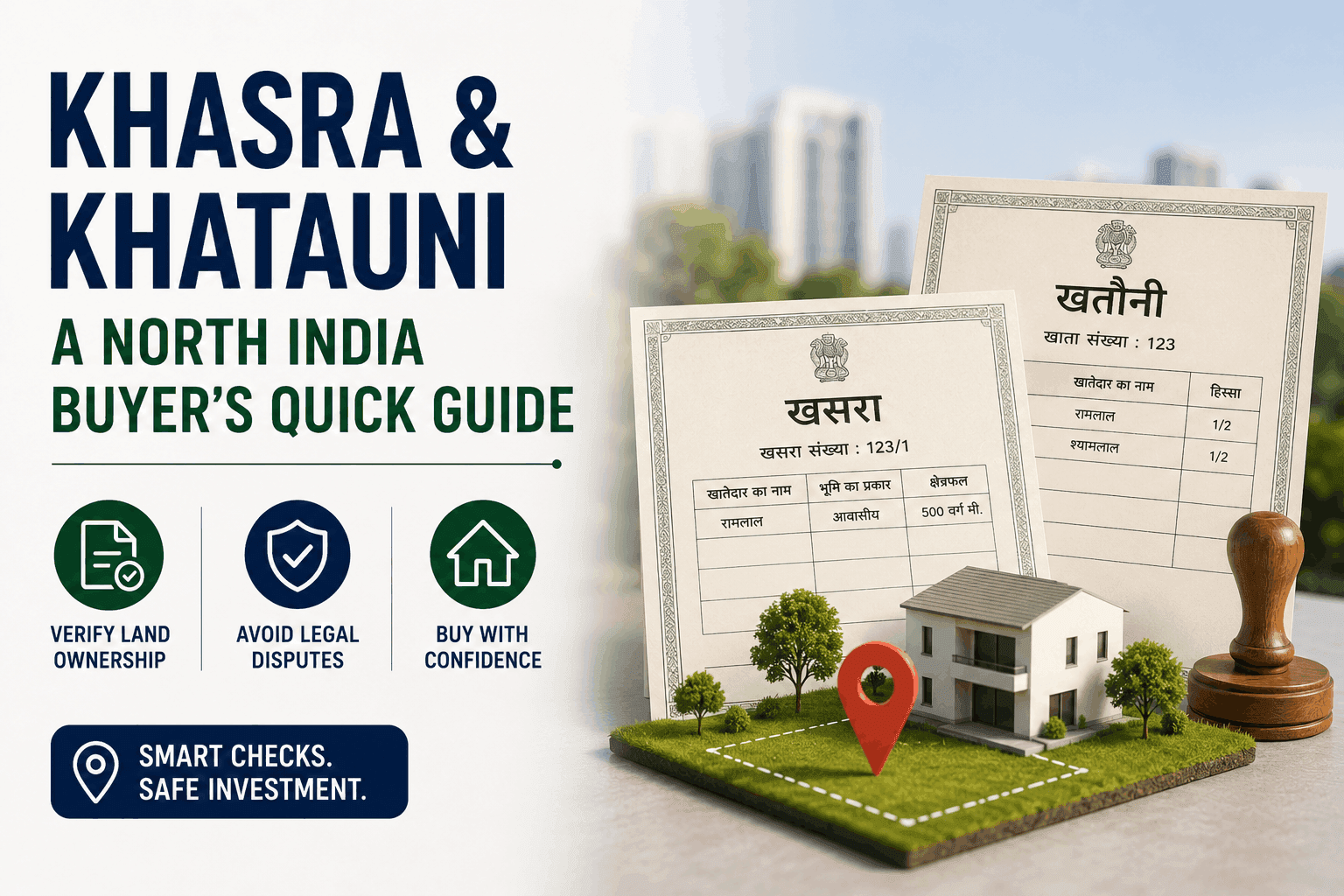
Buying a plot or flat in North India? You have probably heard terms like khasra and khatauni thrown around. But what do they actually mean? And why should you care? I have seen too many buyers in Gujarat get tripped up by these records, even though they are simple once you understand them. The truth is, khasra and khatauni records are your best friends when verifying land ownership. They tell you who owns the land, what it is used for, and whether there are any disputes. Without them, you could end up in a legal mess. So let me break it down for you in plain English.
What Are Khasra and Khatauni Records? A Simple Breakdown
Here is the thing: khasra and khatauni are not magic words. They are official government documents that track land records in states like Uttar Pradesh, Rajasthan, Delhi, Haryana, Punjab, and Uttarakhand. In Gujarat, we use similar systems like 7/12 extracts, but the concept is the same.
Khasra Number: The Plot's Identity Card
Think of a khasra number like a plot's Aadhaar number. It is a unique identifier assigned to each piece of land in a village or town. For example, if you are looking at a plot in Surat's Vesu area, its khasra number will be listed in the village map. This number helps you trace the land's history, including past owners, current use (agricultural or residential), and any loans against it.
Khatauni: The Ownership Ledger
Khatauni is the record of rights. It lists all owners of a particular khasra number, their share percentages, and any mortgages or liens. In my experience, this is where most disputes arise. Imagine you are buying a plot in Ahmedabad's Bopal area. The seller shows you a khasra number, but the khatauni reveals that three brothers own it jointly. Without a clear khatauni, you could end up buying only one brother's share. That is a nightmare.
Why These Records Matter for Your Property Purchase
Now, you might be thinking: "I am buying a flat in a society, not a plot. Do I still need these?" The answer is yes, especially if the society is built on agricultural land that was converted. Let me give you a real example.
Take Ramesh, a first-time buyer from Ahmedabad. He found a great deal on a flat in a new project near SG Highway. The price was Rs 45 lakhs, well below market rate. Excited, he paid the booking amount. But when he asked for the khasra and khatauni records, the builder avoided the topic. Turns out, the land was still classified as agricultural. The builder had not gotten conversion approval from the revenue department. Ramesh lost his booking amount. Do not be Ramesh.
Key Documents to Check Before You Buy
Here is a quick checklist:
- Khasra number: Verify it matches the plot in the sale deed.
- Khatauni: Ensure all owners are listed and have signed the sale agreement.
- Mutation entry: Check that the land has been mutated to the current owner's name.
- Land use certificate: Confirm the land is approved for residential use.
How to Verify Khasra and Khatauni Records Online
Good news: you do not need to visit the tehsildar's office and wait in long queues. Most North Indian states have online portals. For example:
- Uttar Pradesh: Bhulekh (upbhulekh.gov.in)
- Rajasthan: Apna Khata (apnakhata.rajasthan.gov.in)
- Haryana: Jamabandi (jamabandi.nic.in)
- Delhi: Delhi Land Records (drishti.delhi.gov.in)
Step-by-Step Guide for Online Verification
1. Go to the state's land records portal.
2. Enter the village name, khasra number, or owner's name.
3. Download the khatauni and khasra details.
4. Cross-check the owner's name with the seller's ID proof.
5. Look for any encumbrances or pending litigations.
Wondering what to do if the online record shows a different owner? That is a red flag. Do not proceed without a lawyer verifying the chain of title.
Common Mistakes Buyers Make with Land Records
I have seen it all. Buyers relying solely on the builder's word, ignoring khatauni discrepancies, or assuming that a khasra number is enough. Here is what you should avoid:
Mistake 1: Not Checking the Khatauni for Multiple Owners
In joint families, land is often held by multiple people. If one brother sells his share without the others' consent, the buyer gets only a fraction of the land. Always check the khatauni for all co-owners.
Mistake 2: Ignoring Land Use Classification
Agricultural land cannot be used for building a house without conversion. In Gujarat, this is critical for areas like Shela and Gota, where farmland is being converted to residential plots. If the land is still agricultural, you cannot get a home loan or building permission.
Mistake 3: Forgetting to Verify Mutation
Mutation is the process of updating the owner's name in revenue records after a sale. Without mutation, the seller remains the legal owner in the government's eyes. You could face issues when selling later.
RERA and Legal Tips for Gujarat Buyers
While khasra and khatauni are North India terms, Gujarat has its own system under RERA. However, if you are buying land in North India or even in Gujarat from a North Indian seller, these records matter.
RERA Registration: Your Safety Net
Under RERA Gujarat, all projects with more than 8 units must be registered. But RERA does not automatically verify land records. You must do that yourself. I personally recommend hiring a local lawyer who specializes in land revenue law. It costs Rs 10,000-15,000 but saves you lakhs in potential losses.
Specific Localities to Watch Out For
In Ahmedabad, areas like Naroda and Vastral have seen land disputes due to unclear khasra records. In Surat, Vesu and Althan have mixed agricultural and residential land. Always check the revenue department's records before signing anything.
Key Takeaways: Your Quick Action Plan
- Always ask for khasra and khatauni records before paying any advance.
- Verify online through the state's land records portal.
- Cross-check the owner's name with multiple ID proofs.
- Ensure the land is converted to residential use if you plan to build.
- Hire a lawyer for title verification if the property value exceeds Rs 50 lakhs.
Conclusion: Don't Skip This Step
Look, buying property is a big decision. You are investing your hard-earned money. Do not let a simple record check become a costly mistake. Whether you are buying a flat in Gandhinagar's GIFT City or a plot in Rajkot's Kalawad Road, the principles are the same. Verify the land records, understand the khasra and khatauni, and you will sleep peacefully at night.
Still confused? Drop your questions in the comments below, or consult a local real estate lawyer. Your future self will thank you.