
Introduction
Imagine this: After 40 years of working hard, paying off your home loan, and raising a family, you are finally retired. Your home in Ahmedabad's Satellite area is worth Rs 1.2 crores. But your pension barely covers monthly expenses. Medical bills are piling up. Your children are settled abroad. What do you do?
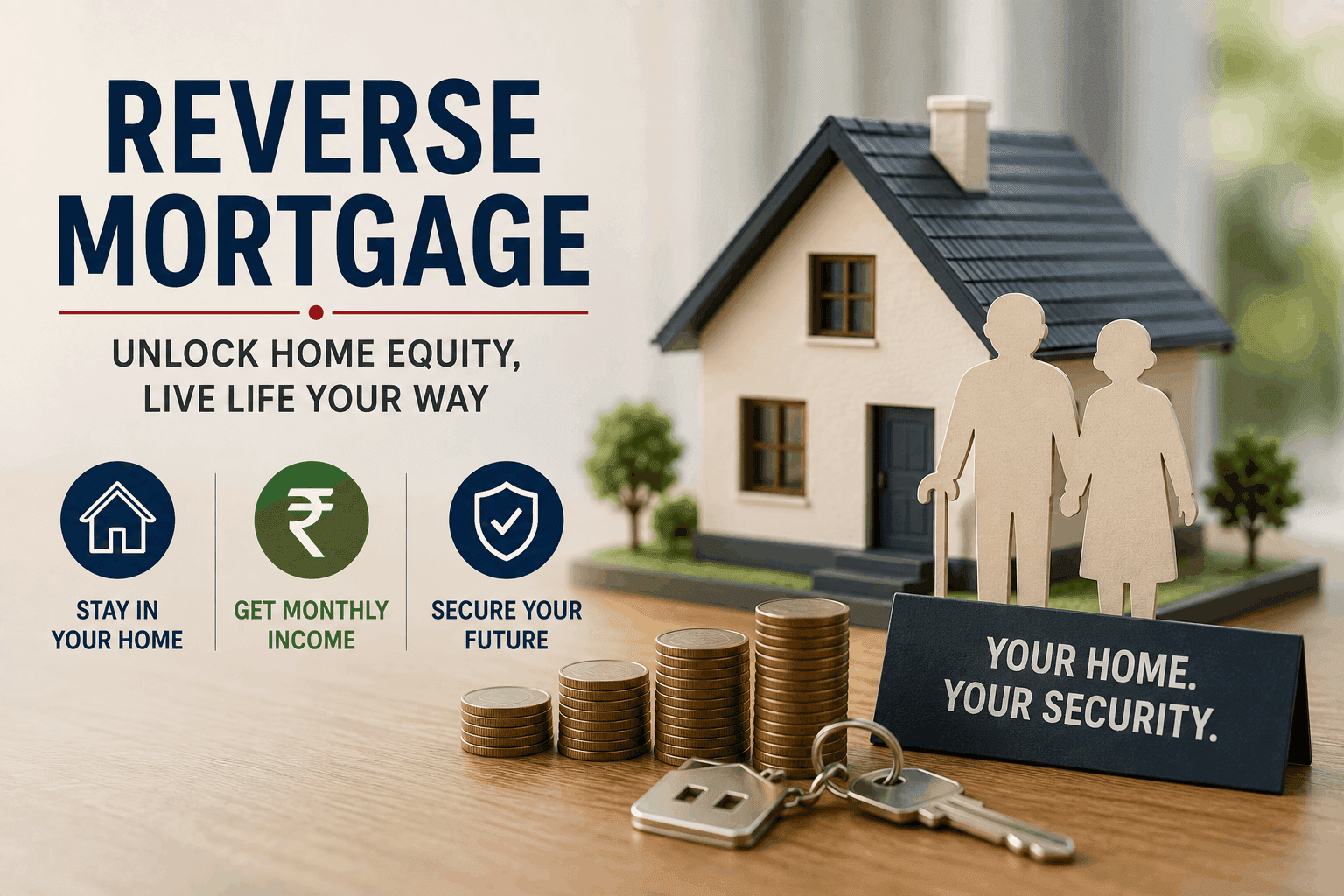
Most senior citizens instinctively think about selling their home. But here is the thing: selling your home means leaving the neighbourhood you love, the community you built, and the memories you cherish. That is where reverse mortgage in India for senior citizens comes in as a powerful alternative. It lets you unlock your home equity without moving out.
In this comprehensive guide, I will explain when a reverse mortgage beats selling your home, how it works, and what Gujarat seniors specifically need to know. Let us dive in.
What Exactly is Reverse Mortgage in India for Senior Citizens?
A reverse mortgage is a loan against your residential property. But unlike a regular home loan where you pay the bank, here the bank pays you.
How It Works
You pledge your self-occupied, residential property to a bank or housing finance company (HFC). They pay you a regular income (monthly, quarterly, or lump sum) for a fixed tenure – typically 10 to 20 years. The loan amount depends on:
- Your age (older you are, higher the payout)
- Property value (market value assessed by bank)
- Interest rate (currently 8-10% p.a. for most banks)
Key Features
- You retain ownership and can live in the property for life
- No repayment is required during your lifetime
- Loan becomes due only when you die, sell, or move out permanently
- Maximum loan tenure is 20 years (extendable in some cases)
- Loan-to-value ratio ranges from 40% to 60% of property value
When Does Reverse Mortgage Beat Selling Your Home?
1. You Want to Stay in Your Home
Here is the biggest advantage: You do not have to relocate. Selling means packing up 30 years of life. For seniors, this is emotionally and physically draining.
Take the case of Mr. Mehta from Surat's Adajan area. He owned a 3-BHK flat worth Rs 80 lakhs. His pension was Rs 25,000 per month, but his medical expenses were Rs 15,000. Selling would mean moving to a smaller rental in a less familiar area. Instead, he opted for a reverse mortgage. He now gets Rs 18,000 per month from the bank, lives in his own home, and his wife continues her morning walks with neighbours.
2. The Property Market is Down
In today's market, Ahmedabad's property prices have seen a 5-8% correction in some areas like Gota and Chandkheda. Selling now means locking in losses. A reverse mortgage lets you wait for the market to recover. The bank values your property at current market price, but you are not forced to sell at the bottom.
3. You Have No Heirs Who Need the Property
If your children are settled abroad or do not need the ancestral home, why leave them the burden of selling? A reverse mortgage converts your home into a steady income stream. Your heirs can always repay the loan and keep the property if they wish. But if not, the bank sells it, and any surplus goes to your legal heirs.
4. You Want Tax-Free Income
Here is a little-known fact: The monthly payouts from a reverse mortgage are NOT taxable as income. Under Section 10(43) of the Income Tax Act, these payments are tax-free. Compare that to selling your home – the capital gains tax can eat up 20% of your profit (after indexation).
The Gujarat Context: Why This Matters for Seniors Here
Gujarat has a unique real estate landscape. Let me break it down.
Urban Centers with High Property Values
- Ahmedabad: Satellite, SG Highway, Bopal, and Shela have properties worth Rs 1-2 crores for decent 3-BHK flats.
- Surat: Vesu, Adajan, and Piplod command Rs 1.5-3 crores for premium apartments.
- Vadodara: Alkapuri and Akota have bungalows worth Rs 2-5 crores.
- Rajkot: Kalawad Road and 150 Feet Ring Road see values from Rs 60 lakhs to Rs 1.5 crores.
For a senior citizen owning a Rs 1.5 crore property in Surat's Vesu area, a reverse mortgage can yield Rs 50,000-70,000 per month for 15 years. That is a comfortable retirement income.
RERA Gujarat Compliance
All properties used for reverse mortgage must be RERA registered. If your property is not registered under RERA Gujarat, the bank may reject it. Ensure your property's RERA number is active. I personally recommend checking the Gujarat RERA website before approaching any bank.
The Math: Reverse Mortgage vs Selling Your Home
Let me give you a practical example.
Scenario: A senior citizen (age 70) owns a flat in Vadodara's Gotri area worth Rs 1 crore.
Option 1: Sell the home
- Sale proceeds: Rs 1 crore
- Capital gains tax (after indexation): ~Rs 15-20 lakhs
- Net amount: Rs 80-85 lakhs
- Monthly income from fixed deposit at 7%: Rs 47,000-50,000
- But you must rent a similar flat: Rs 18,000-22,000 per month
- Net disposable income: Rs 25,000-32,000 per month
Option 2: Reverse mortgage
- Loan amount: 50% of Rs 1 crore = Rs 50 lakhs
- Tenure: 15 years
- Monthly payout: Rs 33,000-35,000 (tax-free)
- No rent to pay
- You keep the property
- Net disposable income: Rs 33,000-35,000 per month
In this case, the reverse mortgage gives you MORE disposable income than selling. Plus, you do not have to move.
Common Myths About Reverse Mortgage
Myth 1: The Bank Will Take Your Home After 20 Years
False. The loan tenure is 20 years, but you can live in the property for life. After 20 years, if you are still alive, the bank usually extends the loan or offers a lump sum settlement. No one throws you out.
Myth 2: Your Children Will Get Nothing
Not true. Your heirs have the first right to repay the loan and keep the property. If the property sells for more than the loan amount, the surplus goes to them. In fact, many banks allow a 12-month grace period for heirs to arrange repayment.
Myth 3: It Is Only for Desperate Seniors
Look, reverse mortgage is a financial planning tool, not a distress sale. Wealthy seniors in Ahmedabad's SG Highway area use it to fund international travel or help grandchildren with education. It is about liquidity, not poverty.
How to Apply for Reverse Mortgage in Gujarat
Step 1: Check Eligibility
- Minimum age: 60 years (some banks require 62)
- You must own a self-occupied residential property in India
- Property must be free from any existing loan or encumbrance
- Spouse must be co-applicant (minimum age 55)
Step 2: Choose the Right Bank
Not all banks offer reverse mortgage. In Gujarat, the most active players are:
- State Bank of India (SBI Reverse Mortgage)
- ICICI Bank (Reverse Mortgage Loan)
- HDFC Bank (Reverse Mortgage Loan)
- National Housing Bank (NHB) – provides refinancing
I recommend SBI because their interest rates are lower (8.5-9% vs 9.5-10% for private banks). Also, SBI has dedicated branches in Ahmedabad (Navrangpura, CG Road) for senior citizen services.
Step 3: Property Valuation
The bank sends a panel valuer to assess your property. They consider location, age of building, construction quality, and market trends. For example, a 20-year-old flat in Bopal, Ahmedabad, may get 50% LTV, while a new flat in Shela may get 60%.
Step 4: Documentation
Typical documents needed:
- Title deed of property
- Sale deed or allotment letter
- Property tax receipts
- RERA registration certificate
- Aadhaar card, PAN card
- Bank statements (last 6 months)
- Proof of age (birth certificate, passport, etc.)
Step 5: Disbursement
Once approved, you choose your payout mode:
- Monthly annuity (most common)
- Quarterly or annual payments
- Lump sum (up to 50% of loan amount, balance as annuity)
- Line of credit (withdraw as needed)
Key Takeaways for Senior Citizens
- Don't rush to sell: If you love your home and neighbourhood, reverse mortgage is a better option
- Involve your children: Discuss with them. Many banks require their consent or at least a no-objection certificate
- Check for prepayment charges: Some banks charge 2-3% if you repay early. Avoid these
- Monitor interest rates: If rates drop, you can switch to a lower-cost bank (like refinancing a home loan)
- Keep property documents safe: Original title deed must be stored with bank, but keep copies
Conclusion
Here is my honest advice: Selling your home should be the last resort, not the first. Reverse mortgage in India for senior citizens offers dignity, financial security, and the comfort of staying in your own home.
But do not take my word for it. Visit a bank branch in your city – say SBI in Satellite, Ahmedabad, or ICICI in Vesu, Surat. Talk to the loan officer. Get a quote. Compare it with selling.
For most seniors I have advised, the reverse mortgage wins hands down. It is not just about money. It is about staying rooted in the community you built over a lifetime.
So, before you put that 'For Sale' board up, explore this option. Your home can take care of you, just as you took care of it.
*Have questions? Drop a comment below or consult a RERA-registered real estate advisor in your city. I am always happy to help.*