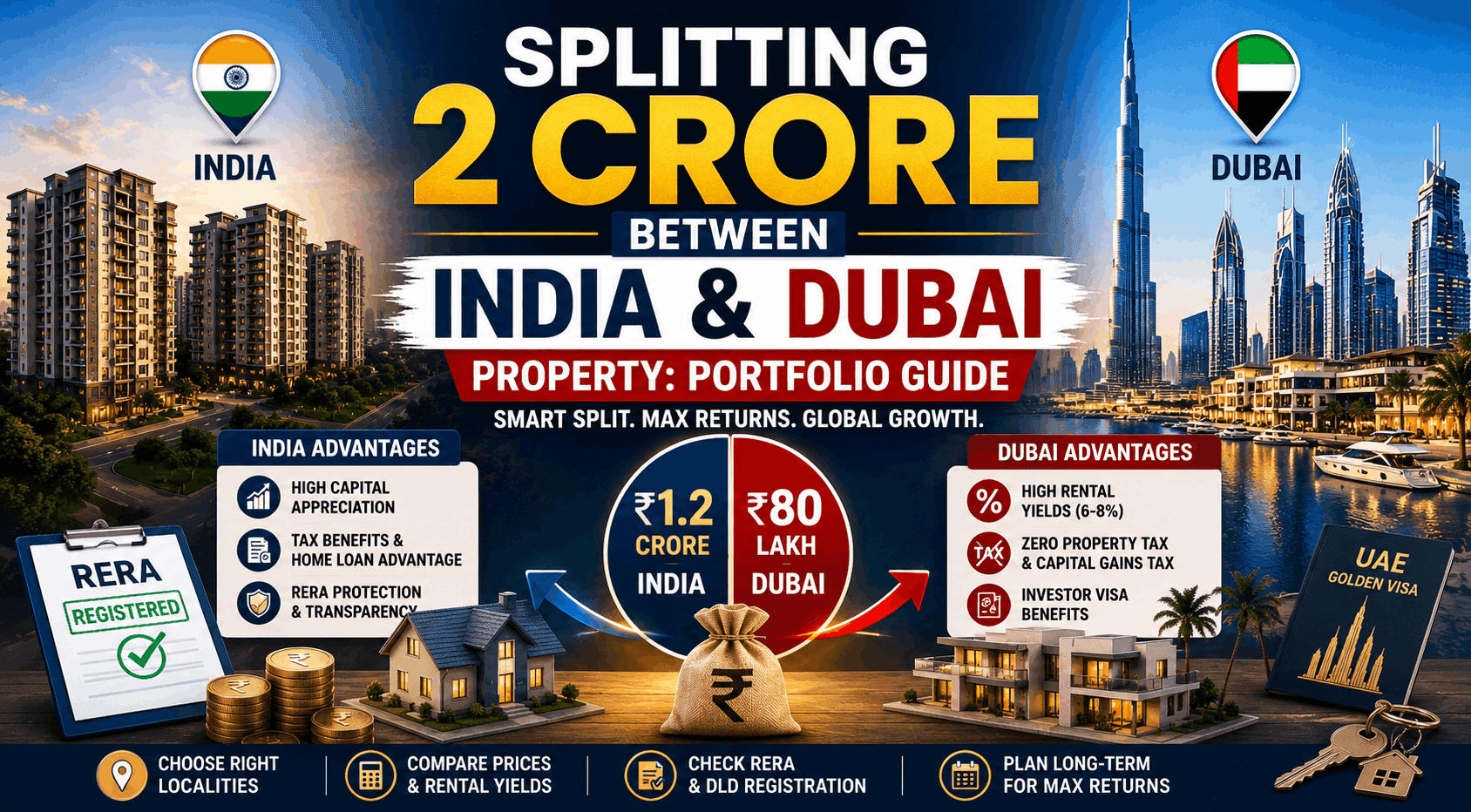

Imagine this: you are sitting in your Ahmedabad office, looking at two options for your next big investment. One is a gleaming new city rising along Dubai Creek, promising luxury and global connectivity. The other is Navi Mumbai, a well-planned satellite city on India's west coast, offering scale and affordability. Both are marketed as 'new cities'—but which one truly makes sense for your portfolio? In this deep dive, I compare Dubai Creek Harbour vs Navi Mumbai: New-City Investment Compared, drawing on my years covering Gujarat's property market and insights from international real estate. Let me tell you, the answer is not as straightforward as you might think.
Why Compare Dubai Creek Harbour and Navi Mumbai?
Here is the thing: when I speak with investors in Ahmedabad's Satellite or Surat's Vesu, they often ask about diversifying beyond Gujarat. The usual suspects are Mumbai, Bengaluru, or even Dubai. But what if I told you that Navi Mumbai, with its upcoming airport and metro, is emerging as a serious contender against Dubai Creek Harbour?
Both projects are master-planned new cities. Dubai Creek Harbour is a massive waterfront development near the historic Dubai Creek, featuring the world's largest observation wheel and a new downtown. Navi Mumbai, on the other hand, is a sprawling node-based city with its own central business district, IT parks, and residential zones. The key difference? One is a luxury playground, the other is a practical urban expansion.
What Makes Dubai Creek Harbour Unique?
Dubai Creek Harbour is being developed by Emaar Properties, the same builder behind Burj Khalifa. It promises a marina, a 1.5-km creek promenade, and a futuristic skyline. Prices here start from around Rs 1.5 crore for a 1 BHK and go up to Rs 5 crore for a 3 BHK. For a Gujarat-based investor, this means high entry costs and potential for capital appreciation—but only if Dubai's economy remains buoyant. In my experience, the rental yields in Dubai are attractive (6-8%), but the market is heavily dependent on expat demand and oil prices.
What Makes Navi Mumbai Special?
Now, let's talk about Navi Mumbai. This is not a speculative venture; it has been growing organically since the 1970s. With the upcoming Navi Mumbai International Airport (scheduled for 2025), the city is poised for a massive transformation. Localities like Kharghar, Panvel, and Taloja are seeing a surge in demand. Prices range from Rs 50 lakh to Rs 1.2 crore for a 2 BHK in a good society.
Take Ramesh, a client from Bopal, Ahmedabad. He bought a flat in Kharghar for Rs 65 lakh in 2020. Today, that flat is worth Rs 1.1 crore. He gets a monthly rent of Rs 35,000. Compare that to a similar investment in Dubai Creek Harbour, where he would have spent Rs 2 crore for a 1 BHK and earned Rs 1.2 lakh rent. The yields are higher in Dubai, but the volatility? That is a different story.
Dubai Creek Harbour vs Navi Mumbai: New-City Investment Compared – Key Factors
Let me break down the factors you must consider before making a decision.
1. Entry Price and Affordability
In Dubai Creek Harbour, you need at least Rs 1.5 crore to enter the market. In Navi Mumbai, you can find decent 2 BHKs in Panvel for Rs 50-60 lakh. For a buyer from Rajkot's Kalawad Road or Vadodara's Alkapuri, this difference is critical. The reality is, most Gujarat investors have a budget of Rs 75 lakh to Rs 1.5 crore. Navi Mumbai fits this bracket perfectly.
2. Rental Yields and Capital Appreciation
Dubai Creek Harbour offers gross rental yields of 6-8%, while Navi Mumbai offers 3-4%. However, capital appreciation in Navi Mumbai has been 10-15% annually over the last five years, driven by infrastructure. In Dubai, appreciation is more cyclical—it can drop 10% in a bad year. What many buyers overlook is that in Navi Mumbai, you can buy multiple units with the same capital, diversifying risk.
3. Legal and Regulatory Framework
Here is a tip for you: always check RERA registration. In Dubai, the Real Estate Regulatory Agency (RERA) is strict, but the legal system is unfamiliar to Indian buyers. In Navi Mumbai, the Maharashtra RERA ensures transparency. You can verify project details online. For a buyer from Surat, who is used to RERA Gujarat, this is reassuring.
4. Infrastructure and Connectivity
Dubai Creek Harbour is well-connected to Dubai International Airport and the new Al Maktoum Airport. But Navi Mumbai's upcoming airport is a game-changer. Once operational, it will serve 60 million passengers annually. Plus, the Navi Mumbai Metro and the proposed bullet train to Ahmedabad will make it a hub.
5. Lifestyle and Livability
Dubai Creek Harbour offers a luxury lifestyle—marinas, fine dining, and Dubai's tax-free income. But for an Indian investor, it is a second home or rental asset. Navi Mumbai offers a practical lifestyle: good schools, hospitals, and a growing IT sector. It is closer to home, which means easier management.
Which One Should You Choose?
I personally recommend Navi Mumbai for first-time investors or those with moderate budgets. The entry price is lower, the regulatory environment is familiar, and the growth story is backed by real infrastructure. Dubai Creek Harbour is for high-net-worth individuals who want a trophy asset and can handle currency risk.
A Practical Actionable Tip
Before you invest, spend a weekend in Navi Mumbai. Visit Kharghar's Central Park or Panvel's upcoming airport site. Talk to local brokers. In Dubai, take a virtual tour of Creek Harbour. Compare the feel, not just the numbers.
Key Takeaways
- Navi Mumbai offers lower entry prices (Rs 50 lakh-Rs 1.2 crore) vs Dubai Creek Harbour (Rs 1.5 crore+).
- Rental yields are higher in Dubai (6-8%) but capital appreciation is more stable in Navi Mumbai (10-15% pa).
- Navi Mumbai's infrastructure (airport, metro) is a sure bet; Dubai's market is cyclical.
- For Gujarat investors, Navi Mumbai is easier to manage and more aligned with RERA norms.
Conclusion
So, what is your next move? If you have Rs 2 crore to spare and want a global asset, Dubai Creek Harbour is tempting. But if you want a solid, long-term investment with lower risk, Navi Mumbai wins hands down. The choice, as always, depends on your goals. But here is my advice: start with Navi Mumbai, build your portfolio, and then consider Dubai.
Have questions about investing? Drop me a comment below. I would love to hear your thoughts on Dubai Creek Harbour vs Navi Mumbai: New-City Investment Compared.