
Emaar India vs Emaar Dubai: Same Brand, Different Buyer Experience
When you hear the name Emaar, what comes to mind? For most Indians, it is the Burj Khalifa, the Dubai Mall, and those stunning waterfront properties in Dubai Marina. But here is the thing: Emaar has been in India for over a decade now, with projects in Ahmedabad, Gurgaon, and other cities. And the buyer experience? It is surprisingly different. In this post, I am going to break down the key differences between buying an Emaar property in Dubai versus one in India. Whether you are a first-time buyer in Gujarat or a seasoned investor, this comparison will help you make an informed decision.
The Brand Promise: Global vs Local
Emaar is a global brand. In Dubai, they are the undisputed king. They build entire communities. Think Downtown Dubai, Dubai Creek Harbour, and Dubai Hills Estate. The experience is seamless. You walk into a sales center, and within hours, you can book a villa with a view of the skyline. But in India? The story is different.
In India, Emaar operates through a joint venture with MGF Developments. This means the brand is diluted. The quality is good, but it is not the same as Dubai. For example, in Ahmedabad, Emaar launched a project called Emaar Emerald in Bopal. Prices started around Rs 45-55 lakhs for a 2BHK. But the experience? It felt more like a local builder than a global luxury brand. Why? Because the processes, the timelines, and the after-sales service are adapted to the Indian market.
Buyer Experience: Dubai vs India
Let me give you a concrete example. Take Ramesh, a buyer from Surat. He wanted to invest in an Emaar property. He looked at Emaar's project in Dubai South. The sales process was smooth. He paid a 10% booking amount, got a payment plan over 5 years, and the project was delivered on time. He even visited the site and saw the progress.
Now, compare that to Emaar's project in Ahmedabad. Ramesh visited the site in Shela. The price was Rs 65-75 lakhs for a 3BHK. But the timeline? It was delayed by 18 months. The sales team was polite but not proactive. The payment plan was rigid. And the after-sales service? He had to follow up multiple times for basic queries.
The reality is that in Dubai, Emaar operates in a mature, regulated market. In India, they face local challenges: land acquisition, approvals, and labor issues. So, while the brand is the same, the buyer experience is not.
Price Comparison: What You Get for Your Money
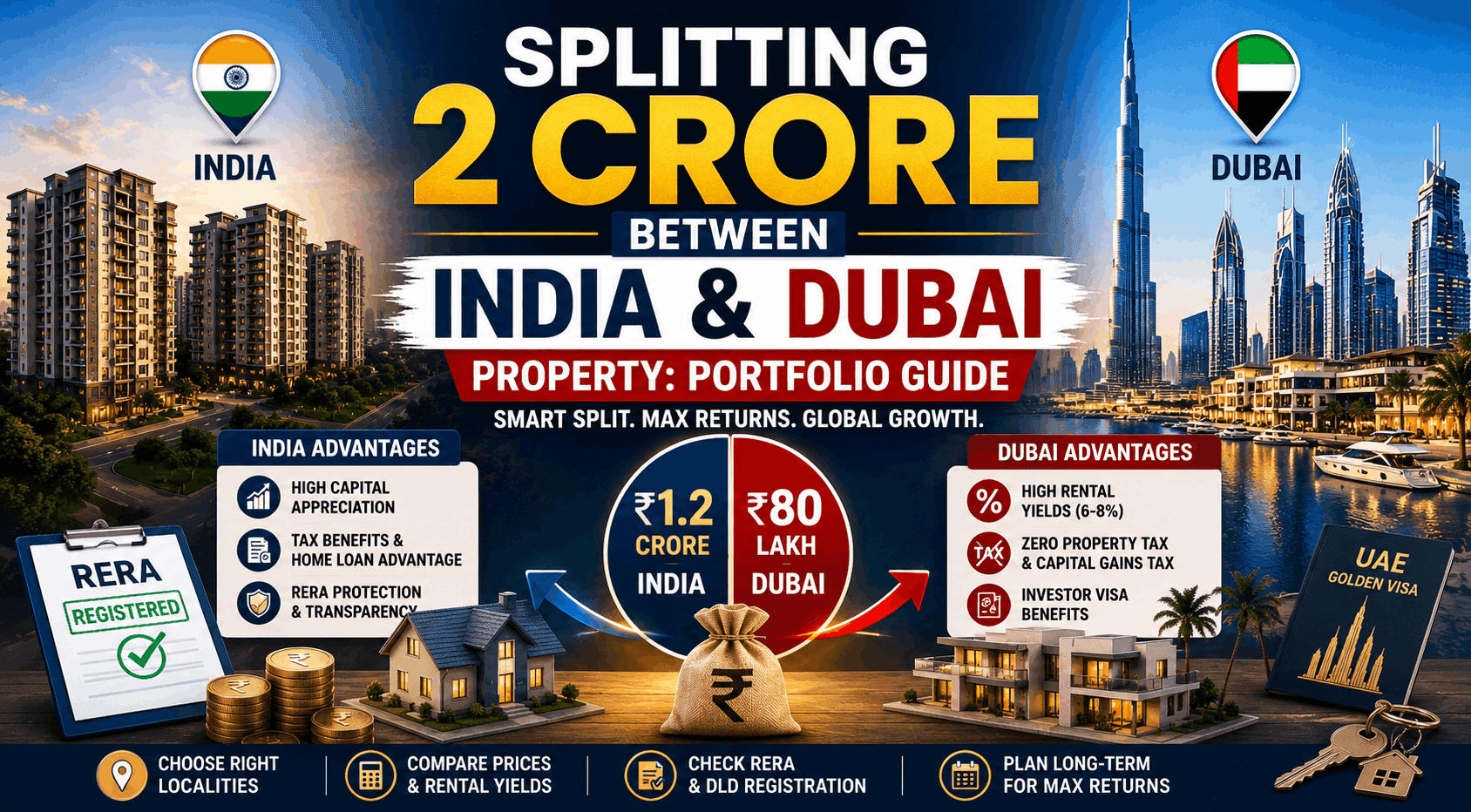
Here is a quick comparison. In Dubai, a 1BHK apartment in a prime Emaar project like Dubai Hills Estate starts at around AED 1.2 million (Rs 2.7 crores). In Ahmedabad, a 3BHK in Emaar's project on SG Highway costs around Rs 1.2 crores. But here is the catch: in Dubai, you get a freehold property with 100% ownership. In India, you get leasehold or freehold but with restrictions.
What many buyers overlook is the rental yield. In Dubai, Emaar properties yield 6-8% annually. In India, it is 2-4%. So, if you are an investor, Dubai might be better. But if you are an end-user in Gujarat, Emaar India offers good value for money, especially in areas like GIFT City or Bopal.
RERA and Legal Aspects: A Key Difference
In India, RERA (Real Estate Regulatory Authority) is a game-changer. Emaar India has to comply with RERA Gujarat. This means the project is registered, the timeline is fixed, and the buyer is protected. In Dubai, the equivalent is RERA Dubai (Real Estate Regulatory Agency). But the enforcement is different.
My advice? Always check the RERA registration number for any Emaar project in India. You can find it on the Gujarat RERA website. This ensures your investment is safe. In Dubai, check the Dubai Land Department (DLD) registration.
Which One Should You Choose?
Wondering where to invest? Here is my take. If you have the budget and want a global lifestyle, go for Emaar Dubai. But if you are based in Gujarat and want to live in your property, Emaar India is a solid choice. Just manage your expectations. The quality is good, but the experience is not the same as Dubai.
Key Takeaways
- Emaar India offers good value for money in Gujarat, but the buyer experience is local, not global.
- Dubai properties are freehold with higher rental yields, but require a larger investment.
- Always check RERA registration for Indian projects.
- For end-users in Ahmedabad, Surat, or Vadodara, Emaar projects in Bopal, Shela, or GIFT City are worth considering.
- For investors, Dubai offers better returns but with currency risk.
Quick Tips for Buyers
1. Visit the site personally. In India, what you see in brochures may differ from reality.
2. Check the payment plan. Emaar India offers construction-linked plans, while Dubai offers post-handover plans.
3. Talk to existing residents. Join Facebook groups or WhatsApp groups for Emaar projects.
4. Compare with local builders. In Ahmedabad, builders like Savvy, Adani, and Shivalik offer similar quality at lower prices.
Conclusion
Emaar is a trusted brand globally. But the buyer experience varies significantly between Dubai and India. While Dubai offers a seamless, luxury experience, India offers affordability and local convenience. My recommendation? If you are buying in Gujarat, focus on the project location and RERA compliance. Do not just rely on the brand name. And if you are investing in Dubai, do your due diligence on the developer's track record in that specific project.
Have questions about Emaar projects in Gujarat? Drop a comment below. I would love to help.