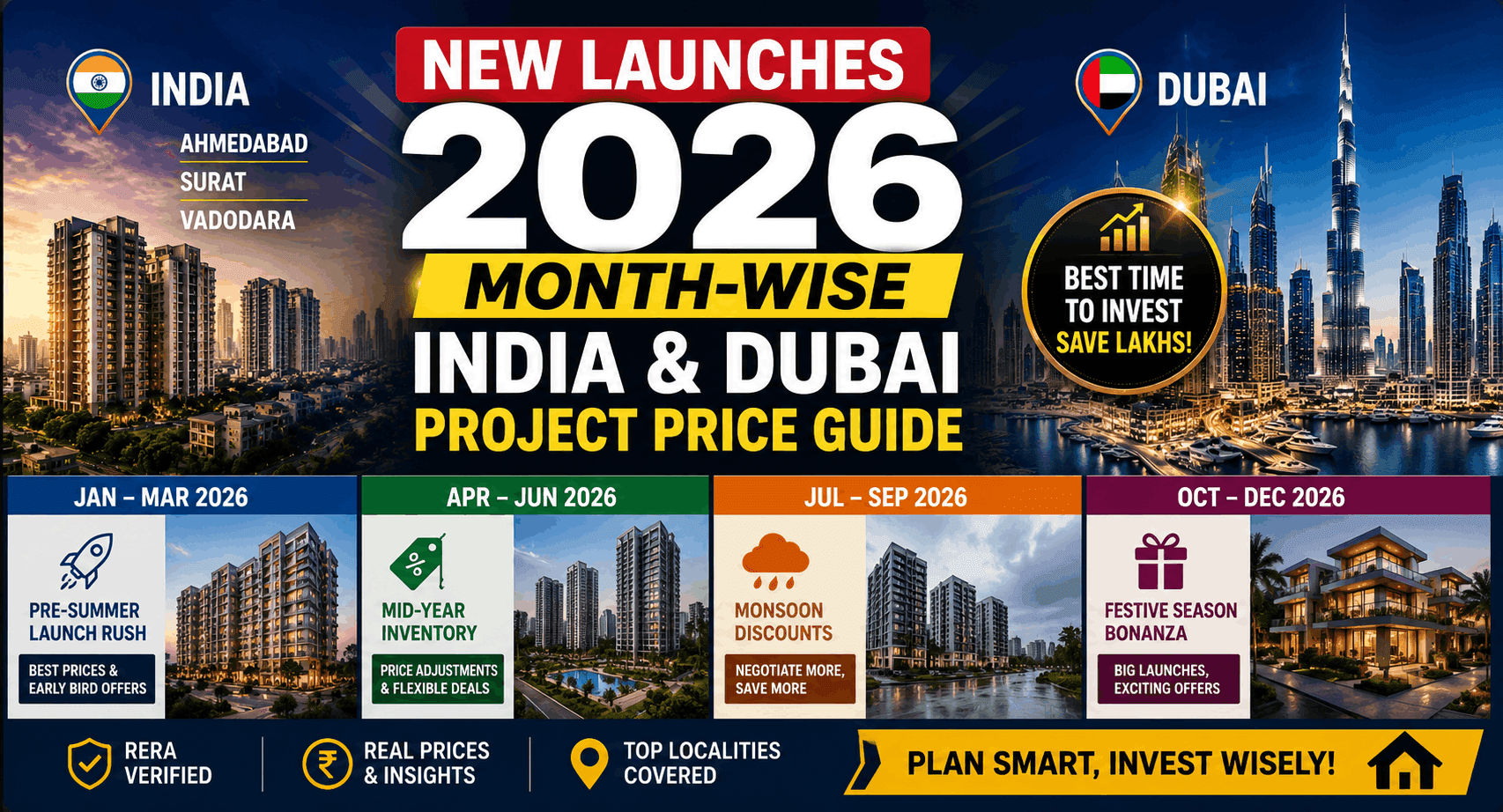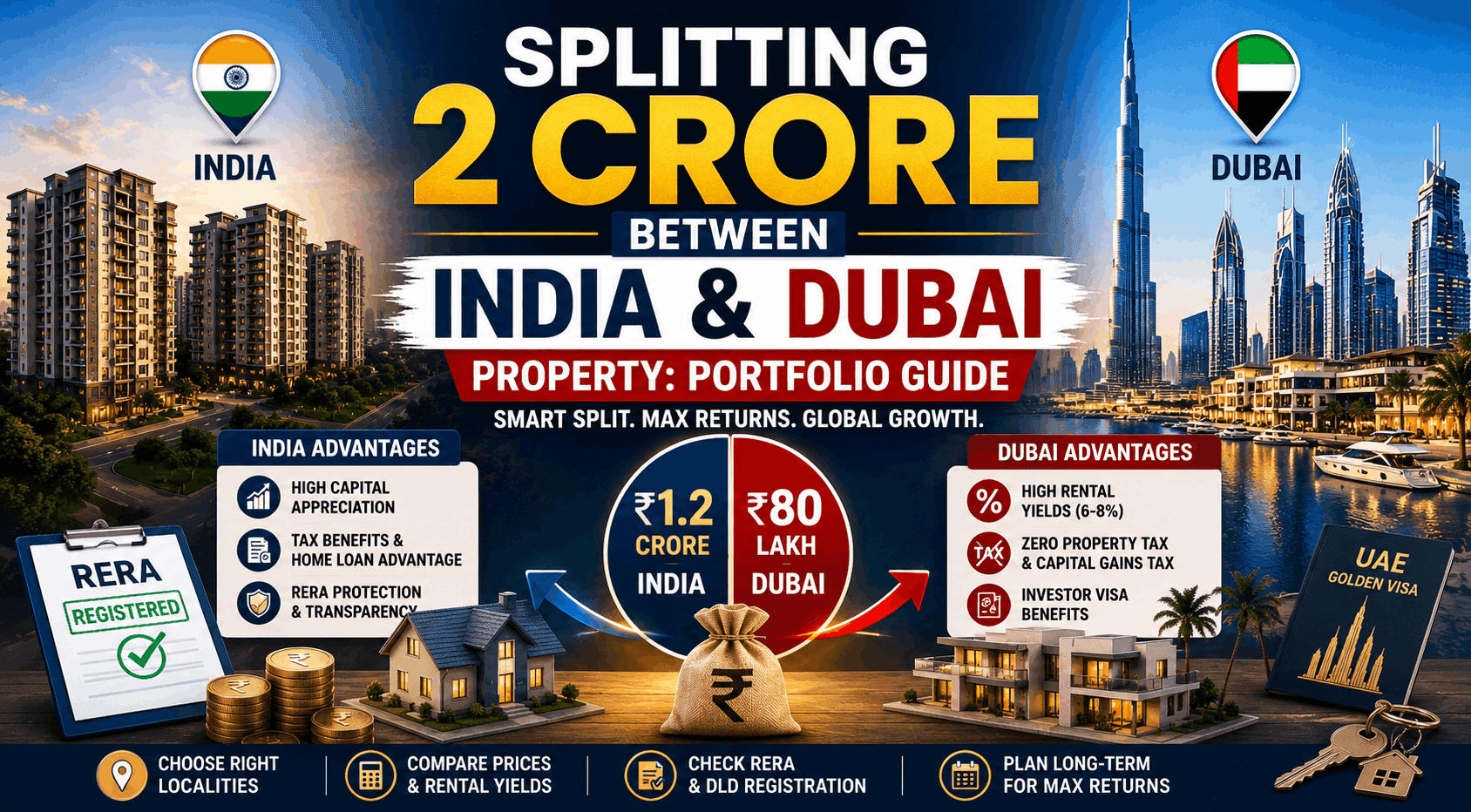

Thinking of investing in affordable real estate with solid rental yields? You are not alone. In 2026, two markets are stealing the spotlight: JVC (Jumeirah Village Circle) in Dubai and Greater Noida West in NCR. Both promise high returns, but which one fits your pocket and goals? In this detailed comparison of JVC Dubai vs Greater Noida West: Affordable High-Yield Compared 2026, I break down prices, yields, risks, and the hidden factors that matter most for Indian investors like you.
Why JVC Dubai and Greater Noida West Are Hot in 2026
Here is the thing: both locations have undergone massive transformation. JVC Dubai, once a quiet suburb, is now a bustling community with over 80,000 residents, parks, schools, and retail hubs. Greater Noida West (also called Noida Extension) has emerged as the go-to affordable belt for Delhi-NCR buyers, thanks to the Noida-Greater Noida Metro extension and new expressways.
But what does this mean for you as an investor? Let us look at the numbers.
JVC Dubai: Price Trends and Rental Yields
In my experience, JVC offers one of the best entry points in Dubai real estate. As of early 2026, a 1-bedroom apartment (700-900 sq ft) costs AED 650,000 to AED 850,000 (roughly Rs 1.5 crore to Rs 2 crore). Rental yields hover between 7% and 9% annually. That is impressive compared to most Indian cities.
- Example: A 1-BHK in JVC can fetch AED 55,000-65,000 per year in rent (Rs 12-14 lakh).
- Capital appreciation: 8-12% year-on-year in prime clusters like Circle 11 and 12.
- Developer quality: Emaar, Damac, and Nshama have projects here. RERA Dubai registration is mandatory.
Greater Noida West: Price Trends and Rental Yields
Greater Noida West is a different beast. Here, a 2-BHK flat (1000-1200 sq ft) costs Rs 35-50 lakh. A 3-BHK ranges from Rs 55-75 lakh. Rental yields are lower at 3-4%, but the absolute rent is decent: Rs 12,000-18,000 per month for a 2-BHK.
- Example: A 2-BHK in sectors like 1, 2, or 10 yields Rs 1.5-2.2 lakh annually.
- Capital appreciation: 5-8% annually in well-connected sectors.
- Key developers: Supertech, Jaypee, and ATS have projects with RERA registration.
Now, the big question: which one gives better returns per rupee invested?
JVC Dubai vs Greater Noida West: Affordable High-Yield Compared 2026 – The Numbers
Let me put it simply. If you invest Rs 1.5 crore in JVC Dubai, you could earn Rs 12-14 lakh in rent annually. In Greater Noida West, the same amount gets you three 2-BHK flats (Rs 45 lakh each), yielding total rent of Rs 4.5-6.6 lakh per year.
Winner on yield alone: JVC Dubai takes it hands down. But wait – there is a catch.
The Hidden Costs and Risks
What many buyers overlook is the cost of ownership. In Dubai, you pay:
- Service charges: AED 10-15 per sq ft annually (Rs 2-3 lakh for a 1-BHK).
- Visa and residency costs: If you plan to live there.
- Currency risk: AED is pegged to USD, so rupee fluctuation matters.
In Greater Noida West, the costs are lower:
- Maintenance: Rs 2,000-5,000 per month.
- Property tax: Minimal (0.1-0.5% of property value).
- No currency risk: All in rupees.
Also, remember this: Dubai rents are paid in advance (typically 1-4 cheques). Greater Noida West rents come monthly. So cash flow differs.
Take Ramesh, a first-time investor from Ahmedabad. He bought a 1-BHK in JVC for Rs 1.6 crore in 2024. His net yield after service charges is 6.5%. Meanwhile, his cousin invested Rs 50 lakh in a 2-BHK in Greater Noida West Sector 10. The yield is 3.8%, but the property has appreciated 15% in two years. Who is happier? Both, for different reasons.
Which One Suits Your Investment Style?
Go for JVC Dubai if:
- You want higher rental yields (7-9% gross).
- You can handle currency and regulatory risks.
- You are looking for a global asset with strong capital appreciation.
- You are okay with a larger ticket size (Rs 1.5 crore+).
Go for Greater Noida West if:
- You prefer a lower ticket size (Rs 35-75 lakh).
- You want rupee-denominated, hassle-free rental income.
- You are a resident Indian investor with no overseas bank account.
- You believe in the long-term growth of NCR infrastructure.
Interestingly, many Gujarati investors split their portfolio. For instance, a buyer from Surat's Vesu area might put Rs 1 crore in JVC and Rs 50 lakh in Greater Noida West. Diversification works.
Infrastructure Impact: Metro, Expressways, and More
Both locations are riding infrastructure booms.
- JVC Dubai: The Dubai Metro 2020 (Route 2020) has a station near JVC. The Al Khail Road connects it to Dubai Marina and Downtown. New schools and hospitals are coming up.
- Greater Noida West: The Noida-Greater Noida Metro line (Aqua Line) now reaches Sector 137, with bus feeders to Sector 10. The FNG Expressway and Yamuna Expressway are major connectors. The upcoming Jewar Airport (Noida International Airport) will boost demand.
Here is my opinion: JVC Dubai benefits from Dubai's global appeal. Greater Noida West benefits from Delhi-NCR's population growth. Both are solid, but for different reasons.
Legal and RERA Tips
- JVC Dubai: Always check the Dubai RERA registration number (available on the Dubai Land Department website). Avoid off-plan projects without an escrow account.
- Greater Noida West: Verify RERA registration on the UP RERA website. Many projects in sectors 1, 2, and 10 are RERA-compliant. Avoid builders with pending cases.
Practical tip: Before buying in either market, get a property valuation from a local registered valuer. In Gujarat, you can consult CREDAI Ahmedabad or Surat for referrals.
Key Takeaways
- JVC Dubai offers higher rental yields (7-9% vs 3-4%) but with higher entry costs and currency risk.
- Greater Noida West is more affordable (Rs 35-75 lakh) and easier for resident Indians.
- Both markets have strong capital appreciation potential (8-12% in JVC, 5-8% in GNW).
- Diversify if you can. A mix of both balances risk and return.
- Always check RERA registration and hidden costs before investing.
- For Gujarat buyers, consider the tax implications: Dubai property income is tax-free (no capital gains if held for 2+ years). Indian property income is taxable.
Final Verdict: Which One Should You Choose?
I personally recommend JVC Dubai if you have Rs 1.5 crore+ and want passive income with global diversification. Greater Noida West is perfect for first-time investors or those with Rs 50-75 lakh budgets. The truth is, both are winners in 2026 – but your choice depends on your risk appetite and financial goals.
Wondering where to start? Talk to a RERA-registered agent in your city. For Ahmedabad buyers, I suggest connecting with brokers specializing in NCR or Dubai properties. You can also attend property expos in Gandhinagar or Surat.
Your next step: Compare three specific projects – one in JVC (like Nshama Town Square) and two in Greater Noida West (like Supertech Eco Village and ATS Pious). Get price quotes, calculate net yields, and decide. The market is hot – do not wait too long.