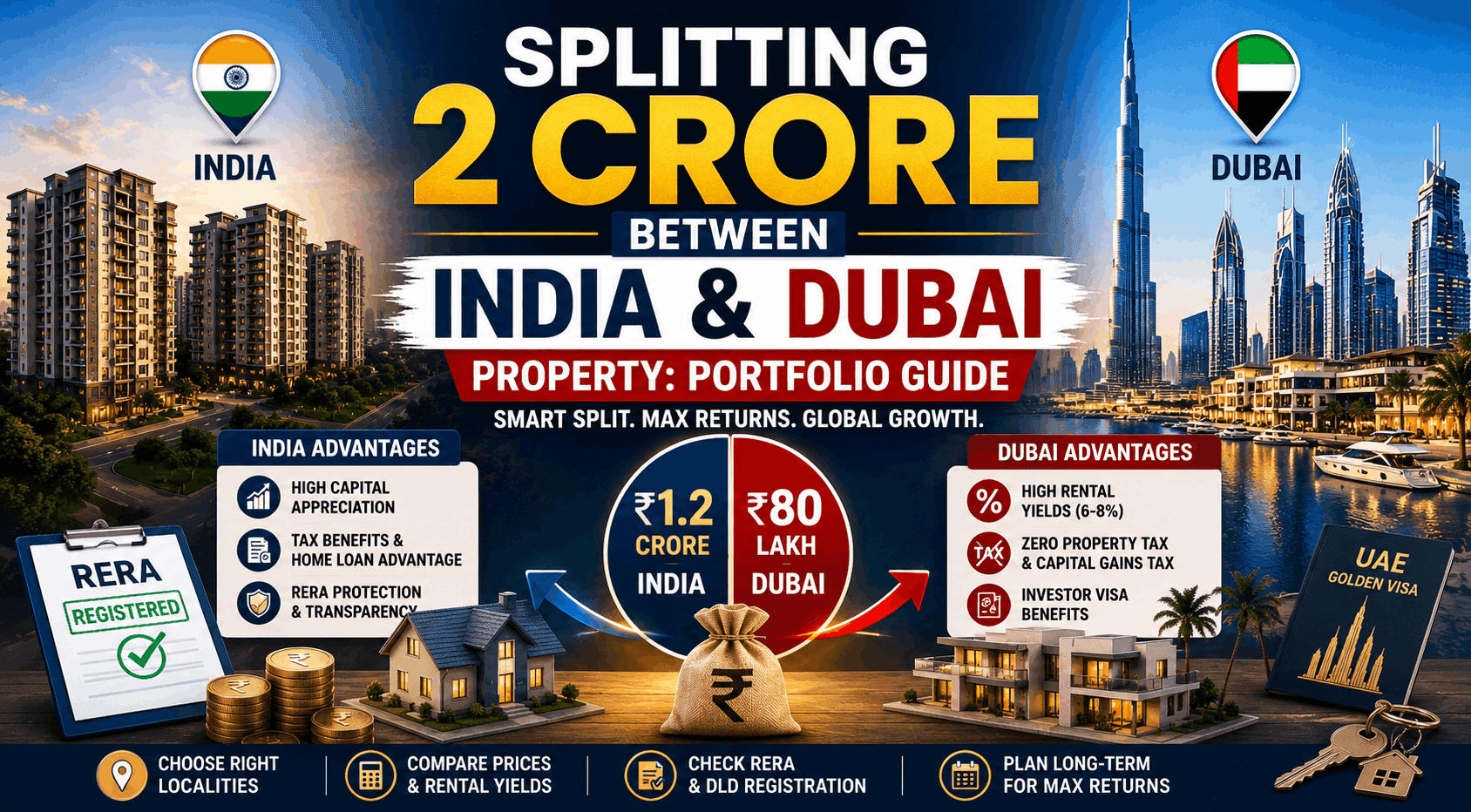

The real estate landscape is shifting. And if you are an investor or a homebuyer, you have likely wondered: *Is Dubai still the gold standard, or are Indian cities catching up?* Let's cut through the noise. In this detailed comparison of Property Prices 2026: Dubai vs Top Indian Cities Per Sqft Compared, we will look at real numbers, real localities, and what your money can actually buy. I have been tracking Gujarat's property markets for over a decade, and here is what I tell my clients: the gap is narrowing, but not in the way you think.
Why 2026 Matters for Property Buyers
Here is the thing: 2026 is not some distant future. It is just two years away. Infrastructure projects in India—especially in Gujarat—are moving fast. The Ahmedabad Metro Phase 2 is set to connect SG Highway to the old city. Surat's Diamond Bourse is already operational. And then there is Dubai, with its Expo City legacy and new visa rules. But what does this mean for price per square foot? Let's break it down.
The Dubai Factor: Premium or Overhyped?
Dubai has always been a magnet for global capital. In 2026, average prices in prime areas like Palm Jumeirah or Downtown Dubai are expected to hover around AED 2,500-3,500 per sqft. That translates to roughly Rs 55,000-77,000 per sqft. Yes, you read that right. For a 1,200 sqft apartment, you are looking at Rs 6.6 crores to Rs 9.2 crores. But here is the kicker: Dubai has no property tax. No capital gains tax either. That is a huge advantage for investors.
However, the cost of living in Dubai is high. Maintenance charges are steep. And the rental yields? They are decent—5-7% in good locations—but not spectacular if you factor in currency fluctuations.
Property Prices 2026: Dubai vs Top Indian Cities Per Sqft Compared – The Numbers
Let us get into the meat of this comparison. I have analyzed data from RERA Gujarat, Magicbricks, and my own network of developers. Here is what the per sqft landscape looks like for 2026:
Ahmedabad: The Affordable Star
Ahmedabad remains one of India's most affordable major cities. In 2026, expect prices in premium areas:
- SG Highway: Rs 6,500-8,500 per sqft (new luxury projects by Savvy Group, Shivalik Group)
- Bopal: Rs 5,000-6,500 per sqft
- Shela: Rs 4,500-5,500 per sqft (emerging hotspot due to SP Ring Road)
- Gota: Rs 4,000-5,000 per sqft
For a 2-BHK flat of 1,000 sqft in SG Highway, you are looking at Rs 65-85 lakhs. Compare that to Dubai's Rs 55-77 lakhs per sqft. In Ahmedabad, your entire 2-BHK costs less than what one sqft costs in Dubai. The truth is, the value proposition is massive.
Surat: The Diamond City's Rise
Surat has seen steady appreciation. By 2026:
- Vesu: Rs 6,000-8,000 per sqft
- Adajan: Rs 5,500-7,000 per sqft
- Piplod: Rs 5,000-6,500 per sqft
A 1,500 sqft flat in Vesu will set you back by Rs 90 lakhs to Rs 1.2 crores. That is still less than 20 sqft in Dubai. But Surat offers something Dubai cannot: a booming local economy driven by diamonds and textiles. Rental yields in Surat are 3-4%, which is reasonable.
Vadodara: The Cultural Hub
Vadodara remains a sleeper hit. In 2026:
- Alkapuri: Rs 5,500-7,000 per sqft
- Akota: Rs 4,500-6,000 per sqft
- Gotri: Rs 4,000-5,500 per sqft
A 1,200 sqft flat in Alkapuri will cost you Rs 66-84 lakhs. That is less than one sqft in Dubai. Wondering why anyone would choose Dubai over this? The answer is global connectivity, lifestyle, and tax benefits. But for pure value, Indian cities win hands down.
Rajkot: The Emerging Opportunity
Rajkot is growing fast. By 2026:
- Kalawad Road: Rs 4,000-5,500 per sqft
- 150 Feet Ring Road: Rs 3,500-5,000 per sqft
A 1,000 sqft flat here costs Rs 35-55 lakhs. That is less than one sqft in Dubai. The truth is, if you have Rs 1 crore to invest, you can buy a 2,000 sqft luxury flat in Rajkot or just 13 sqft in Dubai. The choice is yours.
Gandhinagar: The GIFT City Effect
Gandhinagar is a special case. With GIFT City becoming a global financial hub, prices are rising:
- Infocity: Rs 5,000-7,000 per sqft
- Sector 16: Rs 4,500-6,000 per sqft
A 1,500 sqft flat in Infocity will cost you Rs 75-105 lakhs. But here is the thing: GIFT City offers tax incentives similar to Dubai. If you work in finance or IT, Gandhinagar could be your Dubai without the desert.
Key Takeaways: Where Should You Invest?
Let me share a quick story. Take Ramesh, a first-time buyer from Ahmedabad. He had Rs 80 lakhs to invest. He considered Dubai but realized that a 1,200 sqft studio in Dubai would cost him Rs 60 lakhs—and that is just the down payment. Instead, he bought a 3-BHK in Bopal for Rs 75 lakhs. Today, that flat is worth Rs 90 lakhs. Ramesh is happy. *Would you rather own a closet in Dubai or a home in Gujarat?*
- For investors seeking capital appreciation: Indian cities offer 8-12% annual growth. Dubai offers 5-8% but with lower taxes.
- For NRIs wanting a second home: Dubai offers lifestyle and no property tax. But Indian cities offer emotional connection and lower maintenance.
- For rental income: Dubai yields 5-7%. Indian cities yield 2-4% in Gujarat, but 4-6% in Mumbai or Bangalore.
Practical Actionable Tip
Before you decide, check the RERA registration of any project you consider. In Gujarat, RERA ensures timely possession and quality. For Dubai, verify the developer's track record with the Dubai Land Department. One more thing: always calculate the total cost of ownership, including maintenance, taxes, and currency risk.
Conclusion: The Final Verdict
So, where does Property Prices 2026: Dubai vs Top Indian Cities Per Sqft Compared leave you? The answer depends on your goals. If you want a global lifestyle and tax-free income, Dubai is unmatched. But if you want space, value, and a home that grows with you, Indian cities—especially in Gujarat—are the smarter bet. My personal recommendation: invest in what you understand. For most Indians, that means buying in Ahmedabad, Surat, or Vadodara. The numbers speak for themselves.
*What will you choose? A 100 sqft in Dubai or a 2,000 sqft home in Gujarat? The decision is yours.*