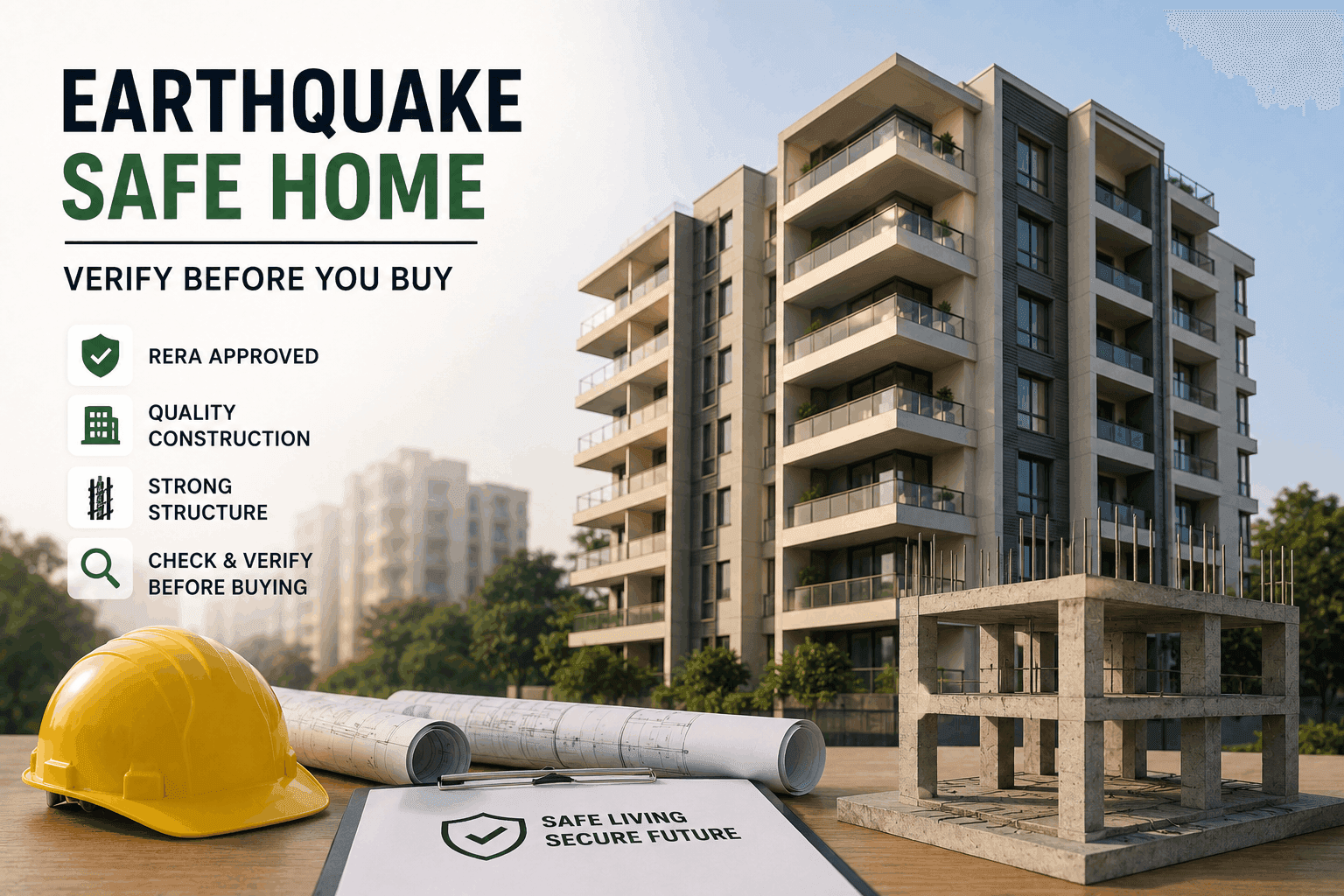
When you are looking at a new apartment in Ahmedabad or Surat, what is the first thing you check? The location? The price? The view from the balcony? Here is the thing—most buyers completely ignore earthquake safety. And that is a big mistake. Gujarat sits in Seismic Zone V, the highest risk zone in India. The 2001 Bhuj earthquake is still fresh in our memories. So, before you sign that agreement, you need to know exactly how to verify apartment earthquake safety in India: how to verify before buying. Let me walk you through the process, step by step.
Why Earthquake Safety Matters More in Gujarat
Look, I have covered the Gujarat real estate market for over 15 years. And I have seen buyers fall in love with a flat's interiors—marble flooring, modular kitchen, fancy lights—but completely ignore the structure. The truth is, no amount of paint or granite matters if the building cannot withstand a tremor.
Gujarat is in Seismic Zone V. That means the highest risk of earthquakes. Cities like Ahmedabad, Surat, Vadodara, Rajkot, and Bhuj are all in this zone. In fact, the 2001 Bhuj earthquake caused massive damage in Ahmedabad, which is over 200 km away. Why? Because many buildings were not designed to handle that level of shaking.
So, what does this mean for you? It means that when you buy an apartment in Gujarat, earthquake safety is not optional. It is a necessity. And the good news is that you can verify it before you buy.
How to Verify Apartment Earthquake Safety in India: The Checklist
Here is a practical checklist you can use today. I have personally used this for my own purchases and for advising clients.
Check the Building's Structural Design
The first thing you need to ask the builder is: what is the seismic zone factor used in the design? For Zone V, the factor should be 0.36 (as per IS 1893 Part 1). If the builder says they used Zone III or IV, run away. That is a red flag.
Also, ask for the structural drawings. A reputable builder will show you the column and beam details. In my experience, builders like Adani Realty or Savvy Group in Ahmedabad are transparent about this. But smaller builders in areas like Bopal or Shela might not be. So, ask. Insist.
Verify RERA Compliance and Structural Warranty
Under RERA Gujarat, every project must have structural safety certification. The builder must provide a structural warranty for at least 10 years. This is not just a formality—it is your legal protection. Ask for the RERA number and check the project status on the Gujarat RERA website. If the structural safety certificate is missing, do not proceed.
Look for Ductility and Reinforcement Details
You might not be an engineer, but you can ask simple questions. For example: what is the spacing of the stirrups in the columns? Ideally, it should be closer (say 150 mm center-to-center) in high-risk zones. Also, check if the building uses ductile detailing—that means the steel reinforcement is designed to bend without breaking. This is critical for earthquake resistance.
Inspect the Foundation Type
For high-rise apartments in areas like SG Highway or Vesu (Surat), the foundation should be pile or raft foundation, not simple strip footing. The soil in many parts of Gujarat is soft, especially near riverbeds. A deep foundation is essential. Ask the builder for the soil test report. If they cannot provide it, that is a warning sign.
Common Mistakes Buyers Make
Let me tell you about Ramesh, a first-time buyer from Ahmedabad. He bought a flat in a new project on the outskirts of Gota. The price was attractive—Rs 45 lakhs for a 2 BHK. But he never checked the structural design. A year after possession, a minor tremor caused cracks in the walls. The builder refused to fix them, saying it was cosmetic. Ramesh had no legal recourse because he did not verify the structural warranty. That is a mistake you should not repeat.
Another common mistake is assuming that all new buildings are safe. That is simply not true. Even in 2024, some builders cut corners. They use less steel or lower-grade concrete to save costs. The result is a building that looks good but is structurally weak.
What to Ask the Builder Directly
Here is a set of questions you should ask the builder or developer. Write them down. Take them with you.
What is the seismic zone factor used?
If they hesitate or say "standard," ask for the specific number. It should be 0.36 for Zone V.
Can I see the structural drawings?
A good builder will show you. If they refuse, consider it a red flag.
Is there a structural warranty for 10 years?
This is mandatory under RERA. If they say no, walk away.
What grade of concrete is used?
For earthquake-resistant buildings, M20 or higher is recommended. For columns, M25 is better.
Have you done a soil test?
Ask for the report. If the soil is soft, the foundation must be deep.
Price Ranges and Safety: What to Expect
In Ahmedabad, a 2 BHK in a safe, RERA-compliant project on SG Highway costs between Rs 65 lakhs to Rs 1.2 crores. In areas like Bopal or Shela, prices are lower—Rs 45-70 lakhs—but you need to be extra careful about structural safety. In Surat, a 3 BHK in Vesu can cost Rs 80 lakhs to Rs 1.5 crores. In Vadodara, prices are more affordable, but do not compromise on safety for a lower price.
My personal recommendation: spend a little extra for a well-known builder. The difference of Rs 5-10 lakhs is worth the peace of mind.
The Role of Indian Standards (IS Codes)
You do not need to read the entire code, but you should know the basics. The key IS codes for earthquake safety are:
- IS 1893 (Part 1): Criteria for earthquake resistant design
- IS 13920: Ductile detailing of reinforced concrete structures
- IS 4326: Earthquake resistant construction
Ask the builder if their design follows these codes. If they say yes, ask for a certificate from the structural engineer.
Quick Tips for Verifying Apartment Earthquake Safety in India
Here are the key takeaways you can use right now:
- Always check the RERA number and structural warranty
- Ask for the soil test report and structural drawings
- Ensure the seismic zone factor is 0.36 for Gujarat
- Look for ductile detailing in columns and beams
- Prefer builders with a proven track record in high-rise construction
- Do not rely on verbal assurances—get everything in writing
- If possible, hire a structural engineer for a third-party inspection
Final Thoughts: Your Safety Is Non-Negotiable
Wondering where to invest your hard-earned money? The answer is simple: in a building that will stand tall when the ground shakes. Earthquake safety is not something to compromise on. In fact, it should be your top priority.
I have seen too many buyers regret their decision because they focused only on the price or the location. Do not be one of them. Use the checklist above. Ask the tough questions. And if the builder cannot answer them, find another project.
Remember, a beautiful apartment is worthless if it is not safe. So, take action today. Verify apartment earthquake safety in India: how to verify before buying is not just a guide—it is your protection. Good luck!